
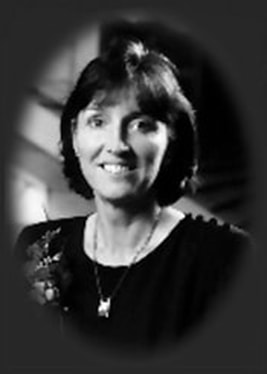
Her Story
Vicki Swartz Roscoe has spent two decades reinventing what a classroom, and eventually an entire school’s teaching staff, could become. Her career carried her across four states and two continents: elementary classrooms in Washington and Oregon, an inner-city school in Portland, a Fulbright exchange year teaching in a British junior school, a teaching exchange in Australia, and finally to Orange County Public Schools in Orlando, Florida, where she now serves as Curriculum Resource Teacher at Southwood Elementary.
That title undersells the role. As Curriculum Resource Teacher, Roscoe does not run her own classroom so much as she runs alongside every classroom in the building — coaching teachers directly at the elbow, modeling lessons, and helping an entire faculty translate research on “best practices” into what actually happens with 850 students spanning kindergarten through fifth grade. She has taught in the heart of Portland’s inner city and in a rural farming town; she has coached novice teachers and lectured graduate students at Portland State University; she has helped design a Master’s degree program in Early Childhood Education. Through all of it, her constant has been curriculum itself — not as paperwork, but, as she puts it, “what happens in the classroom.”
Roscoe holds a Master’s in Teacher Education from Bank Street College of Education in New York, a leader in progressive education, and she has never stopped adding to it: graduate coursework, a 300-hour Gifted Certification, professional writing, and constant travel to study schools abroad, in China, Russia, Belize, Finland, Israel, and beyond. In 1998 she was named Teacher of the Year, and her article “The Case for the Non-Graded Report Card” was slated for publication in Educational Leadership in March 1999 — one of several pieces she has written arguing that traditional grading and reporting systems fail the very students they are meant to serve.
Beyond the Classroom
Roscoe’s classrooms have always looked outward. When her fourth graders studied the Chattahoochee River in Georgia, they didn’t stop at textbook facts — they visited the river, tested its water, painted it, wrote about it, and eventually mounted a campaign to stop others from polluting it, complete with posters around the school and letters to the mayor, city commissioners, senators, and President Clinton. One student, hearing that the river ranked second on the U.S. Endangered River list, insisted the president needed to know. When the replies came back from elected officials, Roscoe’s students felt, for the first time, that they had a genuine voice in the political system.
That pattern repeated itself across every posting: Earth Day cleanups, field trips to dams and state capitols and historical museums, mock elections, student-led debates on real issues, and a running “Current World Events” board that never went dark. Roscoe recruited parents and community members to share their own work and hobbies with students, believing that children need constant proof that reading and writing matter in the world beyond school.
She has also worked to extend her reach through writing, publishing editorials in The Oregonian and The Atlanta Journal-Constitution on debates like whole language versus phonics instruction, building a website where parents could find her articles on math curriculum, handwriting instruction, and spelling development, and serving on advisory committees — including the Georgia Partnership for Excellence in Education — aimed at reforming teacher preparation itself.
Philosophy Into Practice
Roscoe’s philosophy rests on four convictions she returns to again and again: that teaching is fundamentally about relationship-building; that all children, and all teachers, can learn; that learning means making connections across subjects and into the real world; and that education should be viewed as a continuum rather than a set of grade-level boxes sliced apart “with a giant Exacto knife.”
“Teaching is so intense and engaging that it is hard to surface for a gulp of air. Our biggest challenge is to make time to reflect upon our practice. Without this ‘thinking’ time, we cannot grow or improve our craft of teaching.”— Vicki Swartz Roscoe, Philosophy of Teaching
She put that philosophy into structural practice through looping — staying with the same group of students for two or three years running — and found the academic and relational gains “phenomenal.” She resisted pulling exceptional-education students out of her classroom, arguing that the children who most needed consistency were the ones least served by shuttling between rooms. And she pushed, relentlessly, for report cards and assessment systems that told parents the truth about a child’s progress rather than reducing it to a single letter grade.
“I’d rather dig a mile deep and an inch wide than a mile wide and an inch deep when it comes to curriculum.”— Vicki Swartz Roscoe, Philosophy of Teaching
In Her Own Words
“If learning was your passion, can you imagine a better career than teaching?! My intrinsic motivation to learn has always been very strong.”— Who Are You
“Designing curriculum is part of my lifestyle. It is what I do. Being a teacher is a great excuse for continuing to learn about the world myself.”— Professional Biography
“I sought out a teaching position in the heart of the inner city of Portland, Oregon. With my developing commitment to ALL children, I turned down a luxury position of teaching in a wealthy district.”— Professional Biography
“For many of my students, my classroom was their source of stability.”— In the Classroom
“The very act of teaching integrates the best of my heart — my emotions, compassion, my ‘gut level feelings,’ with my head — the logical, practical, philosophical side of me. It is true that if you teach it, you really learn it.”— Who Are You
What Others Said
“Mrs. Roscoe’s finest qualities are her sincere interest in every student, her ability to determine the needs of each, and her commitment to helping teachers meet the needs of all their diverse learners.”— Judith A. Cunningham, Area South Learning Coordinator, Orange County Public Schools
“Vicki was not only our son’s teacher, but my mentor… She stands out far above the rest; she personifies the Master Teacher.”— Sally G. Douglas, Parent and School Board Member
“Vicki Roscoe is a principal’s and school community’s dream come true. I had always hoped that I could find the quality educator that exists in Mrs. Roscoe, both as a teacher and as a principal; it took me 39 years.”— Leanna Isaacson, Principal, Southwood Elementary School
“I have been fortunate to know perhaps 15 to 20 superior teachers in my 30 years as an educator, 19 as a teacher educator. Yet, among those truly outstanding teachers, Vicki is at the top.”— Glennellen Pace, Ph.D., Lewis & Clark College
“In the two years I had Ms. Swartz as a classroom teacher and the subsequent eight years she has been my friend and mentor, I have been continually astounded and impressed by her effectiveness as a teacher.”— Emma Pollack-Peizner, Former Student
“You cannot talk to Vicki for over five minutes and not know that this is a teacher that stands out above her peers. Her demeanor, intelligence, compassion, and sense of humor help urge children and teachers alike to be more than they thought they could be.”— Jan Bernard, 3rd Grade Teacher, Addison Elementary School
“Vicki taught me more about curriculum, assessment, and research in those three years than anyone in my 31 years… Vicki is in the top 1% of educators in the nation.”— Betty Campbell, Retired Principal, Portland Public Schools