His Story
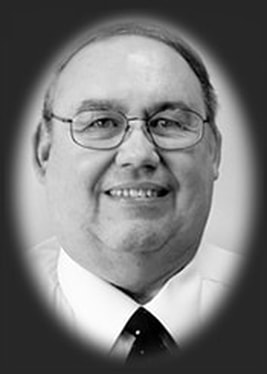
Steve Rapp knew he wanted to teach by the eighth grade, and a high school chemistry class convinced him that opening up the world of chemistry to students would be satisfying. He majored in biology, earned certification in chemistry and physics, and taught chemistry for about twenty years. He holds a doctorate; his dissertation studied how teachers in Northeast Tennessee schools use technology.
Today he teaches physics, astronomy, engineering and robotics to about 50 students in 20 different high schools across southwest Virginia through the A. Linwood Holton Governor’s School, a program that uses the internet, two-way audio and streaming video to bring college-credit courses to small rural schools. Some of his students come from a school with only 100 students in all. He receives 700 to 800 student emails a month and answers every one, and he drives to his students’ home schools, logging more than 2,500 miles one year, to set up equipment.
The U.S. Department of Education named him an American Star of Teaching, the only one in Virginia that year. He was also admitted to the National Optical Astronomy Observatory’s Teacher Leaders in Research Based Science Education program, and he designed and taught the first state-approved high school astronomy course in Virginia, as well as its first interactive television astronomy course.
Beyond the Classroom
In summer 2004 Rapp was one of three teachers selected for the National Radio Astronomy Observatory’s Research Experience for Teachers program, where he helped build and test a low-cost radio frequency interference detector for classrooms. He now leads a Quiet Skies Project with NASA and NRAO, in which students collect data on radio interference in their own communities. Student research from the project was published in the October 2008 issue of The Science Teacher.
He has given more than 30 national presentations, mentored about 15 teachers, and led workshops for teachers across ten school districts, including two $40,000 Eisenhower grants that gave about 40 teachers stipends, graduate credit through the University of Virginia and free classroom software. He taught the graduate course “Rethinking the Teaching of Science.” His students have also taught chemistry demonstrations to more than 1,000 elementary students with the local Hands On Museum and Eastman Chemical Company.
Philosophy Into Practice
Rapp believes students learn science best when they actually do it. At orientation, each physics student receives a kit of materials for experiments, and class projects include a mousetrap-powered “Mousetrap 400” race modeled on a nearby motor speedway, a model airplane lab and a geodesic dome built from newspapers.
He puts students in the role of scientists. His classes have discovered more than 160 new asteroids using remote telescopes, controlled Harvard telescopes through the internet and run radio telescope observations around the clock at the National Radio Astronomy Observatory in Green Bank, West Virginia. Two teams of students have won research proposals to use the world’s largest solar telescope at Kitt Peak in Arizona and published their findings. He measures success by “authentic assessment”: whether students can do the real task, not by grade point averages.
“This is real science!”— Dr. Steve Rapp
“Education should be an experimental enterprise as well as something that assists in social renewal.”— Dr. Steve Rapp
In Her Own Words
“I believe I was born to be a teacher.”— Dr. Steve Rapp
“Education is basically an art, and teachers express the highest concept of this art when they keep it from becoming routinized and lethargic.”— Dr. Steve Rapp
“I think that my students see me as a facilitator, one that can make things happen for them.”— Dr. Steve Rapp
“The most important thing is that the students are learning something.”— Dr. Steve Rapp
What Others Said
“He is providing authentic, real world science to his students via the Internet and through field trips.”— Mary A. Rapp, nominator and spouse
“Dr. Rapp provides his students with a depth of instruction and real-world applications that are very uncommon in today’s classrooms.”— Danny Dixon, Director, A. Linwood Holton Governor’s School
“Of over 800 teachers who have enrolled in our institutes, I place Steve in the top 10%.”— Sue Ann Heatherly, Education Officer, National Radio Astronomy Observatory
“A teacher who goes beyond the extra mile for the sake of the students.”— Connie Walker, Ph.D., National Optical Astronomy Observatory
“His passion for students and their education is his top priority.”— Adam Childers, former student
“He is not only a great teacher in the classroom, but out of it as well.”— Maggie Pochyla, former student