His Story
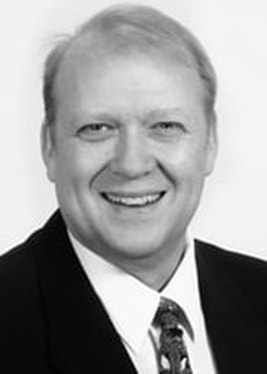
Mark Weaver has taught science at Clay Middle School in Carmel, Indiana for nearly three decades. Both of his parents were science teachers, and he earned a degree in botany because he wanted to put his science background to work in education. His goal is for every class period to be “the most important, happiest, most interesting, most exciting, and most informative time” of a student’s day.
His room is a “living and growing collection” rather than a museum: live turtles, tortoises, frogs, insects and fish, mounted animal heads, fossils, minerals, clocks and constellations built by students, all available to touch and study. Students tap maple trees and make syrup, grow carrot cell cultures using sterile technique, build a miniature Loch Ness from peat and water, and study volcanoes with special effects. A colleague describes the room turning into the ocean floor, dark and full of ocean sounds, for a unit on seafloor spreading, and the gods and goddesses of the constellations telling their stories in another.
His multi-disciplinary outdoor lab on early Indiana man-and-land interactions is so well loved, his superintendent writes, that students “talk about this unit for years after they leave middle school.” He also leads grade-wide trips to Crown Hill Cemetery to study rocks and weathering and to Strawtown Koteewi Park, where students screen for artifacts alongside archaeologists.
Beyond the Classroom
Weaver developed one of the first full-scale outdoor laboratories for students and the community, including a pond and trail with many plant and animal species, and he now takes all of Clay’s seventh graders through its outdoor environmental program. The state has used the facility for its own programs. After school he runs a club that plants wildflower areas and trees, supports local animal rehabilitators, takes field trips and adopts animals around the world.
He has written materials for the Indiana Department of Education, helped review state science standards and licensure, and serves on committees for the state Superintendent. He sits on the Board of Visitors for Butler University’s College of Education and previously for Indiana University’s School of Education, belongs to the Indiana Teacher of the Year and Milken Educator networks, has presented at national conferences and an annual state environmental education workshop, and has taught classes in the Indiana Women’s Prison. He has also volunteered for the Salvation Army for over thirty years.
Philosophy Into Practice
Weaver wants students to enjoy science, learn its skills, share what they find, and also “learn those skills that are necessary for them to become good members of society.” He avoids complacency and tries never to get stuck in methods that do not energize his students. He brings in guests such as a tattoo artist to talk about how Japan’s volcanoes influenced his craft.
He reports that his students stay in touch for years, sending news of their lives long after they have left his classroom.
“Mark is a great problem solver and he deals with parental concerns about their students in a compassionate and well thought manner.”— Former principal and district administrator
In His Own Words
“Every child can learn.”— Mark R. Weaver
“An educational opportunity should not be wasted, but taken advantage of.”— Mark R. Weaver
“The assessments, just like in my teaching, should reflect real problems and situations.”— Mark R. Weaver
What Others Said
“His teaching is outstanding.”— Gary Huddleston, Principal, Clay Middle School
“Mark is an excellent school teacher. He first and foremost cares about his students.”— Former principal, district administrator and parent
“No one I encountered has engaged young people in active learning like Mark Weaver has.”— Former colleague
“He showed me how teaching science should not revolve around a textbook.”— Tracy Krause, colleague
“Brilliant instruction of this fantastic teacher.”— Jeff Swensson, Superintendent