
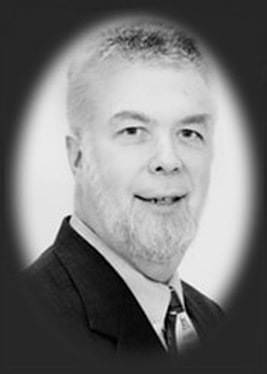
His Story
John Mahoney got into teaching “somewhat by accident.” As a graduate student at Temple University, working toward a doctorate in math, he taught freshman math on a teaching assistantship. At 22 he had students older than he was, among them Vietnam veterans and women returning to school after raising families, and many were anxious about math. He decided to teach it so that it could be understood, designed math games, and held lots of extra-help sessions. By his third year he was paying more attention to what he taught than to what he studied. He left the PhD program after finishing all his coursework and took a high school job at a salary of $7,200. “Thirty-three years later I’m still teaching high school math and still loving it.”
He holds a bachelor’s degree in mathematics from Bucknell and a master’s from Temple. His career began in private schools, including Moorestown Friends, Wilmington Friends and, for 24 years, Sidwell Friends School in Washington, where he won the Washington Post‘s Agnes Meyer Outstanding Teacher Award. After 29 years in private schools, he chose not to retire. In 2001 he left Sidwell for Benjamin Banneker Academic High School, a District of Columbia public school. The decision grew out of a week-long workshop he gave in 1999 at Gallaudet University for D.C. public school teachers, where he was inspired by their dedication. His move was covered in two Washington Post articles and in USA Today.
At Banneker he found many students who had not built strong algebra skills and were graduating without confidence in math. He persuaded the school to offer AP Statistics as an alternative to pre-calculus. Four months later he was teaching 60 students, half the senior class, and all of them took the AP exam. Students design surveys, run statistical projects from their own community service work, and argue their conclusions with data. In 2004 he was named to the USA Today All-USA Teacher Team. A minor planet has been named “Johnmahoney” in honor of his mentoring of student Andrei Munteanu, who placed ninth in the 2004 Intel Science Talent Search.
Beyond the Classroom
In 2001 Mahoney helped Banneker join the FIRST Robotics competition. He and three other faculty members work with the team after school, building a 130-pound robot in his classroom with help from Howard University engineering students and the National Society of Black Engineers. The team won the “Judge’s Award” at the U.S. Naval Academy in 2003. Most team members are young African American women, and three of them are now studying engineering in college.
In fall 2002 he and colleague Kim Ables wrote an epidemiology curriculum linking AP Statistics, AP Biology and community service. It won one of three national prizes in the Robert Wood Johnson Foundation’s Young Epidemiology Scholars Teacher Competition, a $20,000 award the two shared. He sponsors the school’s Amnesty International club, coaches the It’s Academic quiz bowl team, chairs Banneker’s Middle States accreditation effort, and has written successful grant proposals for Toshiba, AOL and the Washington Post. Earlier, he twice took a van of students from his previous school to South Carolina to help rebuild burned African American churches, and he chaired the board of Sandy Spring Friends School for two years.
Nationally, he has published more than 40 articles on mathematics, chairs the editorial panel of ON-Math, the NCTM’s online journal, and has been an AP Calculus Reading participant since 1986, serving two years as an exam leader. He has been a staff member of the Park City Mathematics Institute and has spoken on math education in England, Japan and Denmark. His honors include the Presidential Award for Excellence in Mathematics Teaching (1994), the Radio Shack National Teacher Award (2000) and a Fulbright Memorial Fund award (1999).
Philosophy Into Practice
Mahoney does not lecture from the book. He guides students to understanding and then has them explain what they have learned to one another, in small groups or at the board. He arrives an hour before the first class each day to work with any student who comes in for help, including students of other teachers, and he uses lunch and after school the same way. He believes his grade book should be a clipboard: he spends class time walking from group to group, and he assesses success through homework, quizzes, projects, group work and student self-evaluation.
He has also pushed back on high-stakes testing, which he calls “fundamentally unfair to students,” arguing that no single test should decide graduation. After visiting schools in Japan on a Fulbright program, he warned that teaching to the test narrows the curriculum. He actively seeks out first-year teachers at his school and supports them informally throughout the year.
“Math is hard — until you understand it. Once you understand it, you can explain it to someone else.”— On his teaching
“My basic philosophy in teaching high school mathematics is: If students can learn math on their own, they should learn it on their own.”— On his teaching
In His Own Words
“My main tool is compassion. That’s the most important quality that any teacher needs to have — and this is particularly true for a high school math teacher.”— John Mahoney
“Most importantly, students learn math best by doing math.”— John Mahoney
“My courses are 200-day marathons. Each student benefits from being in the course and from their collaboration with other students.”— John Mahoney
“I long ago decided to teach to the needs of the students and to take the necessary time in order to do so.”— John Mahoney
“I worked hard to become a humane math teacher.”— John Mahoney
“The part of the curriculum that can never be measured is the pride and self-confidence of the students. That’s how my school and I measure success.”— John Mahoney
What Others Said
“Mr. Mahoney believes in his Banneker students, and challenges them to live up to their potential. Banneker has been privileged to have been given the gift of his experience and his talents.”— Katherine Wheatley, parent of a student
“Students recognize and appreciate John’s faith in them, and over the course of the year they, too, begin to believe that they can have mathematical success in high school and beyond.”— Carol Ann Konrad Murray, colleague
“I highly recommend Mr. John Mahoney for the Hall of Fame because he is not only a phenomenal educator, he is an exquisite person with a warm heart, and a true sense of service, pride and purpose.”— Anoa Hunter, student
“By taking the gods of calculus and turning them into humans, he makes the subject more approachable, and allows his students to think that we, too, could pursue mathematics as a career.”— Anna Liebowitz, student
“He lets students know that he values and respects them. He is able to push students to stretch their capabilities beyond the point they thought they could reach.”— Patricia L. Tucker, Principal, Benjamin Banneker Academic High School
“We have seen astounding results because of his steadfast commitment to give his very best to students and teachers.”— Carolyn N. Pinckney, Director, D.C. Office of Teacher Affairs
“John not only seeks to bring out the best in his students but also the best in his colleagues.”— Kim S. Burke-Ables, colleague
“John is a stellar teacher, as evidenced both by the number and variety of awards he has earned, but also by the direct, personal impact he has had on the entire Banneker community.”— Richard Singer, colleague