
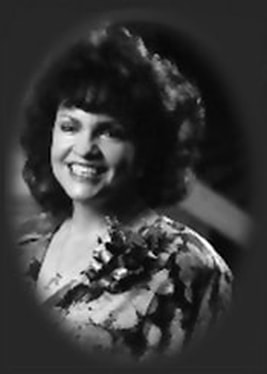
Her Story
Debra D. Peppers became a teacher because two women refused to give up on her. As a self-described “troubled, overweight teenager,” she was taken under the wing in 1966 by her sophomore English teacher, Miss Alma, who — alongside Peppers’s grandmother, herself a teacher since 1919 — modeled compassion, enthusiasm, and unconditional love at a point when Peppers badly needed all three. She carried that debt into her own classroom: after student teaching at a rural Alabama school in its first year of integration, where she discovered a gift for mediation, and after marrying her college sweetheart and losing 100 pounds along the way, Lindbergh High School hired her in 1974 as an English, speech, and drama teacher — the same subjects Miss Alma had once taught her.
Over twenty-five years at Lindbergh, Peppers built an extraordinary record of innovation and recognition: Missouri State Teacher of the Year finalist and recipient of the Robert Elsea Award for Outstanding Educator in St. Louis County (1990), the Emerson Electric Excellence in Education Award and District Teacher of the Year (1989), the Missouri State Technology Award (1995), the state’s DIANA Award for professional excellence by a woman of achievement (1997), and selection as one of five teachers nationwide to be profiled in the documentary “The High Performing Teacher.” She wrote and produced the original play “Choices,” addressing teen issues from eating disorders to suicide, which Southwestern Bell Telephone purchased and turned into a nationally distributed, Emmy Award-winning educational documentary reaching an estimated 100,000 people. She hosted a daily three-hour call-in radio program on KJSL, taught graduate courses in the Master of Arts in Teaching program at Webster University for years, and was in the process of enrolling at Columbia University, joking that she might soon become “Dr. Pepper.”
Twenty-five years into her career, Peppers still described teaching as a “sacred mission,” crediting her own history as a struggling teen with the empathy that let her reach the students everyone else had given up on — the ones sent to her by administrators and colleagues precisely because of her gift for connecting with the “toughest case.”
Beyond the Classroom
Peppers treated community involvement as a natural extension of her classroom, directing more than thirty school plays and musicals and regularly taking student performances to nursing homes, hospitals, children’s homes, and community events like the V.P. Fair. She founded and led her district’s peer mediation and conflict resolution team twenty-five years before her nomination, helped implement Lindbergh’s Alternative School program for at-risk students, chaired the “Teachers for Lindbergh” campaign that passed a bond issue to fund a new multimillion-dollar auditorium (which she has managed ever since), and helped formulate the district’s Teachers’ Care Team, whose recommendations led directly to the hiring of a district intervention counselor.
Her civic and church involvement ran just as deep: choir member, soloist, songwriter, and children’s-ministry director at her church; volunteer with Teen Challenge, Young Life, and 12-Step recovery groups; board member for Light of the World Ministries and the Regional Arts Council; and active participant in the Substance Abuse Committee, National Council on Alcoholism, Rotary, Kiwanis, and Optimists. She created “Drama Mamas and Glad Dads,” a parent booster group that became, in the words of one parent, “a second home” to families across the district, and wrote the original play “Act Your Age,” pairing twenty-five teenagers with twenty-five senior citizens for a single unforgettable production. She was invited to give the commencement address at her own former high school, where she was finally able to publicly thank Miss Alma for changing her life.
Philosophy Into Practice
Peppers believed teaching was “more than imparting knowledge” — it was sharing “every part of one’s mind, soul and experience,” which meant a teacher had to also be a coach, counselor, confidant, and friend. Her guiding classroom rule was that every student must attempt every assignment: “I’ll try” replaced “I can’t” as the only acceptable starting point, and she rewarded effort as much as performance. She held that teachers bear full responsibility for reaching every student, even while acknowledging they cannot change a child’s home environment or genetics — only attitudes, study habits, and self-esteem.
In practice, this meant a classroom built around “Words of Inspiration” each morning, journal writing, cooperative learning, and an open floor plan with a “desk side” and a separate performance and resource area. She wrote original plays with her students on real teen issues, invited parents in as guest presenters and even cast members, and insisted that every lesson prepare students for life outside her classroom, not just a test inside it.
“I truly believe a child doesn’t care how much you know until he knows how much you care.”— from her essay, “Philosophy of Teaching”
“I have a better sense of humor; I am more tolerant; I work better with all people; I am more creative, more organized, more relaxed, and yet more energetic — all because I teach! More than that, I still love to learn! Daily my students teach me.”— from her essay, “Philosophy of Teaching”
In Her Own Words
“I became a teacher thanks to my grandmother who became a teacher in 1919 and because a very special sophomore English teacher, Miss Alma, became my role model back in 1966. As a ‘troubled, overweight teenager’ I was introduced to the world of literature, speech and theater; Miss Alma and my grandmother both taught me compassion, enthusiasm and unconditional love.”— from her essay, “Professional Biography”
“I consider my greatest accomplishment not to be what I have done, but what I have given.”— from her essay, “Professional Biography”
“I know from personal experience as a troubled teen that I had to be ready for change. Until I came to grips with myself, with my peers and with society in general, I could not succeed, though my parents and my school had done their best. That is our accountability as teachers–to do our best–to never give up even on the ‘toughest case.'”— from her essay, “In the Classroom”
“Every time a troubled teen, or overweight young girl knocks on my door for assistance, I know they don’t need to hear about the philosophy of education or how to undangle a participle. But it is my firm belief that if I can help others make it through the tough times… I look beyond the ‘attitudes’, the baggy pants, the orange hair — I look straight into the soul of that precious child — just as ‘Miss Alma’, my English teacher did with me thirty years ago.”— from her essay, “Who Are You? What Makes You Tick?”
“We know the financial constraints upon our schools these days… We must learn how to write grants, to pass bond issues by involving the entire community – even those who no longer have children in the schools.”— from her essay, “Educational Issues”
What Others Said
“In my fifty years of involvement in education, I know of no other teacher that has made such a positive impact as has Debra Peppers. She is not only an outstanding teacher but also an outstanding person. She has not only influenced every student she has ever taught, but her colleagues, parents and the entire community.”— Dr. Gene Englehardt, Board of Education and Former Principal
“This senior high English, speech and drama teacher makes a dull room come to life; boredom becomes excitement; apathy becomes caring. She is every teacher’s model—the standard by which administrators judge others.”— Shelton E. Smith, Assistant Superintendent, and David Skillman, High School Principal
“As a student of Mrs. Peppers for the past four years and now looking forward to graduation, I know that I may not have been here at all had it not been for her. Mrs. Peppers is not only the best teacher, but she has also been my motivator, my ‘counselor’, my friend, and at times my ‘surrogate mother’.”— Melissa Smith, Student
“I am writing this letter on behalf of Debra Peppers who is not only currently teaching at Lindbergh High in St. Louis, but who was also my teacher there from 1975-1979. I became a teacher thanks to her. The actual fact is that were it not for Deb Peppers I would probably not be alive today.”— Linda Underwood, M.A. Ed., Former Student and Teacher
“Debra Peppers is simply the best there is! She is an outstanding teacher, role model to students and teachers alike, and the most caring person I have ever known… She calls her students ‘her children’ and her colleagues ‘her brothers/sisters’.”— Sandra Snodgrass, Parent and Fellow Teacher