
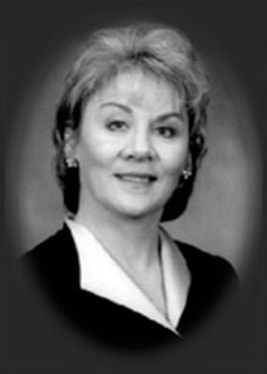
Her Story
Cynthia Jones was born in upstate New York into a poor family and credits her grandparents for much of the teacher she became. One grandfather, an undertaker’s assistant and odd-job man, taught her that “people are people.” Another grandmother, an orphan with a shortened leg, taught her that everyone wants to be loved, appreciated and valued. In her essay she recalls a night at a Cape Cod lighthouse, where her grandfather showed her that “it is the reflectors that do the work,” and she has ever since thought of a teacher as one who focuses and magnifies each child’s light.
She began college intending to study botany or earth science, but teaching “mesmerized” her. Her father, the son of immigrants, had hoped for more than “just teaching,” and by graduation he told her, “Cin, you have a real gift.” She earned a B.A. in elementary and gifted education from Georgia State University in 1979 and an M.A. in experimental psychology from Middle Tennessee State University in 1997, both with a 4.0 GPA. She began at Suder Elementary in Clayton County, Georgia, and was named the county’s Outstanding First Year Teacher.
In Murfreesboro she co-created and led the MERIT program for gifted children, created the Transitional First program at Mitchell-Neilson Primary, and designed the city’s thinking skills curriculum. Since 1991 she has taught a third and fourth grade “loop” at Cason Lane Academy. Her honors include a Fulbright Scholarship to Japan (1999), the Tennessee Department of Education’s Apple for the Teacher Award (2002), state finalist for Tennessee Teacher of the Year (1992 and 2002), and a place in the NEA’s The New Parent Handbook. She was also a finalist for the National Teachers Hall of Fame in 2002.
Beyond the Classroom
Jones describes her approach as “bringing the outside world in and taking the inside world out.” Volunteers have brought microscopes and amoebae, animal skulls, a carpenter’s tools, a fairy tale read in French, and a police officer with his German shepherd. A pilot once dropped in to hand out wings and salted peanuts. Her students collect soap and shampoo samples for the elderly, adopt Salvation Army Angels in place of exchanging gifts, collect eyeglass frames for people in Mexico, write to pen pals in Japan and Asia, and share an intergenerational project with a local nursing home.
She also advises home-schooling parents, gives free workshops across Tennessee, speaks regularly to local and state officials about education, and serves on her teachers’ association negotiating team. A colleague wrote that, as the association’s chief negotiator, she helped win a contract that “was the model for the state of Tennessee for a long while.”
Philosophy Into Practice
Jones compares her philosophy to a hollow peppermint pig from her family’s Christmas, with the treasures inside, and says its three tenets are “fair means everyone gets what they need, not that everyone gets the same,” “all of us together are better than one of us alone,” and “E Pluribus Diversitates.” Her class is divided into three permanent mixed teams she calls “tribes,” which hold weekly “pow-wows” under the rule “Ask three, then me.” Her reading groups are formed by learning style, not ability.
Her master’s work in experimental psychology led her to build the room around brain research. There are green plants, bottled water, color-coded spelling words, music and movement for different kinds of learners, classroom pets, and a good deal of laughter. Her principal calls the result “orderly chaos.”
“Fair means everyone gets what they need, not that everyone gets the same.”— from her essay, “Philosophy of Teaching”
“There is no magic, actually. It is research, intuition, trial and error, and bountiful amounts of love.”— from her essay, “Professional Profile”
In Her Own Words
“A teacher is like the reflectors in a lighthouse. That is, the light or energy of each child is redirected, refined, and magnified.”— from her essay, “Getting to Know You”
“Carrots only grow from carrot seeds. You gotta have faith.”— from her essay, “Educational Issues,” quoting a horticulturist
“Without relevancy the ideas, concepts and skills taught in school remain just that – isolated skills and idea taught in school.”— from her essay, “Outside the Classroom”
“A fulfilled educator is called a teacher; a fulfilled child is called a student.”— from her essay, “Professional Profile”
What Others Said
“Cynthia Jones is an example of what is good, right, and successful in American public education.”— Susan Gendrich-Cameron, Principal, Cason Lane Academy
“Cindy Jones stands alone when it comes to involving students in critical thinking activities.”— Marilyn M. Mathis, Director of Schools, Murfreesboro City Schools
“My son would not have been as successful if Ms. Jones had not been part of his world.”— Linda Arms Gilbert, Ed.D., Associate Director for Instruction and Professional Development, Murfreesboro City Schools
“She is an extraordinary teacher, an extraordinary person.”— Barbara McDaniel, retired teacher
“Mrs. Jones’ door is always open to everyone!”— Melissa McElroy, second grade teacher, Cason Lane Academy
“Mrs. Jones is not normal! She is so beyond the normal teacher that I consider her the most extraordinary teacher I have ever had in my educational experience.”— Richard Anderson, former student
“She has started the building of many great Eiffel Towers, Taj Mahals, and Empire State Buildings in our society.”— Felicia Jackson, educator and colleague, Cason Lane Academy