
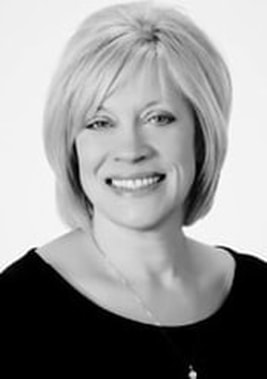
Her Story
Beth Vernon teaches eighth-grade earth and space science at Brittany Hill Middle School in Blue Springs, Missouri. Her students walk in singing the songs she wrote, such as one that calls the periodic table “the alphabetical order of science.” She says songs are “a ramp to ease students’ minds into thinking,” and she compares the lingering tunes to a movie soundtrack that stays with you after you leave the theater. A message in plastic letters on her blackboard reads “We are making memories.”
Her method is “first the experience, then the learning.” She squeezes pocket lint in a plunger until it flashes, lights a tube of black tissue paper that lifts off her hand, and has students stack colored sugar-water solutions in a test tube, then connects each one to the science: star formation, updrafts and hail, ocean density. Students count galaxies in the Hubble Deep Field image and move around the room, with desks cleared away, to defend positions in an interactive newspaper unit. She makes sure that “every decoration here is actually one of our science lessons,” as one student put it.
Her principal says her lessons put her students’ scores “at the very top of our high-performing district,” and that as the school moves toward the Common Core, “she’s already there. She’s just waiting for us to catch up.”
Beyond the Classroom
Vernon recorded two albums of classroom songs, Beth’s Rock Collection Volume One: Songs of Science for Our Times and Volume Two: Songs for the Heart and Mind. Thousands of copies are in circulation, and teachers write to her from Texas, California and North Carolina about how the songs help their students. She has presented her workshop “I Can’t Get This Song Out of My Head” to hundreds of teachers at local schools and national science conventions.
She won the Disney American Teacher Award in 2000. In Missouri’s Select Teachers as Regional Resources program she spent a full school year out of her own classroom sharing best practices and the new neuroscience of learning with rural teachers. She has trained in the brain-based learning work of Pat Wolfe, and she is building an online training site with short “explainer” videos to share what she has learned with other teachers.
Philosophy Into Practice
Vernon built her teaching on neuroscience. She cites Marion Diamond’s finding that the brain is “neuroplastic”: that “smartness” is “something you work toward, not something you either have or don’t have.” She teaches students how sleep, attention and effort shape memory, and she wrote a Code of Learning Conduct for them.
She worries that high-stakes testing pushes teachers to settle “for the most efficient way of teaching” and away from “joyful, rich learning experiences.” Her own answer is to keep her eyes above the test and to check understanding constantly with concept maps, clicker quizzes and exit tickets, which she calls “the currency with which the economy of my classroom operates.”
“We are making memories.”— Beth Vernon, message on her classroom blackboard
In Her Own Words
“Create the classroom I would want to learn and grow in every single day.”— Beth Vernon
“I want to create a joyful space where thinking is valued and visible, where effort is reinforced and where questions drive learning.”— Beth Vernon
“Practice does not make perfect. Practice makes permanent. Perfect practice makes perfect.”— Beth Vernon
What Others Said
“Dr. Robert Marzano says Beth Vernon is a gift to the children of the world.”— Paul Kinder, Superintendent, nominator
“Beth Vernon, without a doubt, should be inducted in the National Teachers Hall of Fame. Ask her current and former students and they will tell you she already is.”— Principal, Brittany Hill Middle School
“Beth is an extraordinary teacher.”— Rose M. Farris, special educator and colleague
“She was the teacher everyone hoped they would get and whose class people reminisced about years after they had left.”— Former student
“Mrs. Vernon appreciated everyone’s ideas and believed in everyone’s dreams.”— Former student, 2011–2012 school year