
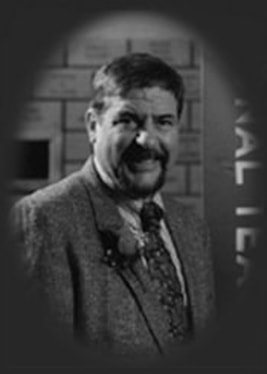
His Story
Alan Haskvitz spent years in the business world with a junior executive title, good pay, and real privileges before a college friend changed the course of his life. While visiting that friend during a vacation, Haskvitz went to school with him and spent the day helping a small group of students work on a presentation. He came back the next day of his vacation, and the next, and by the time the project was finished he knew something had shifted. For reasons he still could not fully explain years later, he gave up his business career, returned to university for his master’s degree and teaching credential, and — with his family’s support despite the financial cost — set out to become a teacher. Jobs were scarce when he finished his training, so he spent three years as a substitute before finally landing a position teaching second and third grade, where he began to see the value of a learn-by-doing philosophy that would define the rest of his career.
Haskvitz went on to teach at every grade level from primary school through college and in nearly every subject, earning credentials in art, business, computers, special education, gifted education, coaching, educational administration, museology, language development, and technology, in addition to degrees in English, American Studies, and technical journalism. By the time of his nomination he had spent 23 years in the classroom, the most recent 11 as a social studies teacher and eighth-grade department chair at Suzanne Middle School in the Walnut Valley Unified School District, where his students’ state standardized social studies test scores rose from the 22nd percentile the year before he arrived to the 94th percentile — the largest gain in California history — even as the school’s demographics shifted dramatically and its enrollment grew by nearly 60 percent.
Haskvitz’s honors reflected recognition from both educators and the public he had made a point of serving. He was the first classroom teacher ever selected for the International Robert Cherry Award for Great Teachers, an honor previously reserved for university professors and based on the long-range impact of a teacher’s program on past students. The National Council for the Social Studies gave him both its Outstanding Teacher Award and its National Exemplary Program Award; the School Boards Association awarded his program two Golden Bell awards for the best program in the state; he received Reader’s Digest’s “Hero in Education” award, the Christa McAuliffe Award, and Learning Magazine’s Professional Best Teacher Award; he was named the state’s Agriculture Teacher of the Year; and he received both his high school’s and his university’s outstanding alumni awards, including Cal Poly’s 50th-anniversary Outstanding Alumni in Education honor. His own school’s roughly 60 teachers voted him their favorite five years running, and his fellow teachers elected him their Teacher of the Year.
Beyond the Classroom
Haskvitz’s students consistently turned classroom projects into work with real civic consequences. They wrote and helped pass California state legislation and ballot propositions, wrote the official voting rules adopted by the County of Los Angeles, and built and helped run a demonstration garden — later judged the best in Los Angeles County by the Department of Agriculture — that the local water district credited with helping save more than 23 million gallons of water a year. They built the Challenger Memorial and hosted the community’s annual salute to the astronauts, served as the community’s official historians, produced a video and questionnaire on the history and meaning of the Pledge of Allegiance, and became the first students in the country to receive correspondence from Panama’s General Manuel Noriega about the U.S. invasion of Panama, in addition to responses from world leaders including Queen Elizabeth II. Their research into violence in school social studies textbooks and their national grass-roots-heroes book project — compiled by writing to every town and city in the United States — both grew out of ordinary class assignments.
His students maintained a ten-year partnership with a seeing-eye-dog center, raising money by selling houseplants they grew themselves; wrote a daily newsletter for a local hospital’s maternity ward so new parents would have a record of the day their child was born; developed water-displacement kits for area homeowners; registered voters and hosted the town’s only public candidate forums; learned sign language to help deaf voters; wrote a regular history column, with reader quizzes, for the local newspaper; and worked with the Los Angeles County court system to help develop questions used with offenders. A plan they developed successfully ended graffiti on their own campus, and their work studying graffiti controls worldwide, along with their environmental and community-service projects, won them national and international recognition, including selection over 20,000 other entries to speak before the United Nations about the importance of education and the environment, and selection over 12,000 entries for a trip to Washington, D.C. to meet the President in recognition of their work on civic change.
Outside his own classroom, Haskvitz served as an elected city commissioner in the community where he lived and helped found a historical commission in the community where he taught — work colleagues noted was unusual for a teacher to be doing in two different cities at once. He served on the city’s planning and historical preservation commissions, helped organize its 150th-anniversary celebration, coached a wide range of youth and adult sports from ice broomball to Pop Warner football, organized what was described as the nation’s largest community basketball program, coached a mixed wheelchair basketball team, and advised the school newspaper, the yearbook, and a multicultural club he helped organize for the campus’s Native American students. He wrote more than 30 professional articles for publications including Phi Delta Kappan, Learning Magazine, and the National Council for the Social Studies’ journals, developed and distributed a free Spanish-language audiotape explaining the Bill of Rights, wrote and received more than $30,000 in grants to support his classroom without burdening his district’s budget, and served on six national education committees along with numerous state, district, and local ones.
Philosophy Into Practice
Haskvitz built his teaching around a five-part approach: making material relevant to students rather than teaching facts for their own sake; learning by doing, so students could apply skills to solving realistic problems; integrating subjects rather than teaching them in isolation, since he believed life itself is not divided into neat academic categories; teaching students to see the other side of an issue and to recognize propaganda for what it is; and, finally, empowering students to work within the system and their community to make society better through real, non-busywork projects. He believed a teacher represents civilization itself — the trust a society places in an individual to prepare its children for life — and that a teacher must live that role publicly as well as in the classroom.
He resisted the idea of himself as simply the authority at the front of the room, preferring instead to be, in one student’s words, a “guider” rather than a rescuer — someone who taught students to find safety for themselves rather than handing them a lifeline. That conviction repeatedly showed up as a refusal to let students remain passive: he pushed them to take responsibility for their own decisions, treated their community-service projects as genuine work rather than busywork, and built curricula, from civics to art to special education, around getting students to apply what they learned in the real world rather than simply absorb it.
“Perhaps what one student wrote best summarizes my philosophy. She said, ‘You are not like other teachers. When we are drowning you do not throw us a lifeline. Instead you stand on the shore and teach us how to find safety for ourselves so the next time we can do it for ourselves. You are more than a teacher, you are a guider.'”— from his essay, “Philosophy of Teaching”
“A teacher represents civilization because the existence of this profession shows the faith a society has to place their children into the trust of an individual to prepare that child for life… A teacher represents not just knowledge or skill, but humanity and civilization.”— from his essay, “Philosophy of Teaching”
In His Own Words
“There is only one answer to this question—its students. What other profession offers you the opportunity to learn from such a variety of minds on a daily basis. Being a teacher is having a ticket to the Comedy Club and Jeopardy one moment, and Queen for a Day the next.”— from his essay, “Philosophy of Teaching,” on why he is a teacher
“In my 23 plus years of teaching I have frequently been asked to be an administrator. I have always turned these requests down because I would have to give up the classroom. Why? The answer is always the vitality of working with students.”— from his essay, “Philosophy of Teaching”
“The learning experience was not the newspaper—that was to build their self-esteem. The true value was that they were dealing with adults and the real world that awaited them.”— from his essay, “Philosophy of Teaching,” on his students who could barely write producing their own school newspaper
“The goal of my program, as always, is to make learning meaningful and to instill a lifetime joy of learning in my students. In other words, Make A Difference.”— from his essay, “In the Classroom”
What Others Said
I have known Alan Haskvitz for over 8 years as his principal. In this time it has become well apparent to me that he is the most innovative teacher I have ever known… Although he has been offered administrative positions in his 20 plus years as a teacher, he has passed up these opportunities to remain in the classroom because he feels that is where he is most needed.”— Bryan Cole, Principal, Suzanne Middle School
“For objective evaluation as to his value to education consider the fact that before he arrived at the school the social studies scores were in the 22nd percentile. Working with his fellow teachers and as eighth grade department chair he helped raise the school to the 94th percentile — the largest gain in history.”— Dr. Tom Coughran, President, Baldy Vista Chapter, California Council for the Social Studies
“No other teacher that I know has ever been so successful with such a diverse group of students… The highest accolade that I can pay to Alan is that he is easily the most successful teacher I know and should definitely be a role model for the education system.”— Dr. Bruce Grube, President, St. Cloud State University
“In my thirty years in education, both as a principal and district coordinator, I have never observed a teacher take a more active and positive approach to education than Mr. Alan Haskvitz… I have never observed such an unparalleled community awareness and support of education for any program.”— Don Seraba, Community Liaison, Walnut Valley Unified School District
“Alan is a very dynamic and innovative teacher of the Social Studies… Alan has the ability, energy, dedication and commitment to reach way beyond the classroom for resources and support. His network is extensive and he practices collaboration in the building of a support base to bring resources into the classroom.”— Ronald W. Hockwalt, Ed.D., Superintendent, Walnut Valley Unified School District