
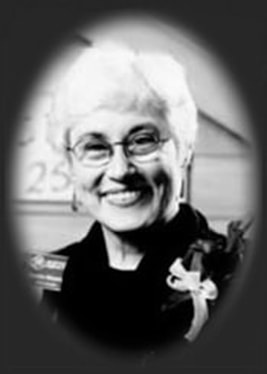
Her Story
Sandra Worsham spent thirty years teaching English at Baldwin High School in Milledgeville, Georgia, all but two of them within the same county school system where she herself grew up. She retired in July 1999, having spent the final stretch of her career doing something most veteran teachers avoid: trading her advanced-placement classes for a full schedule of at-risk ninth graders, students other teachers found hardest to reach.
Worsham’s path to the classroom ran directly through her own love of writing. A published short-story author with ten stories in print between 1980 and 1987, and a participant in the elite Bread Loaf, Sewanee, and Bennington Writers’ Conferences, she brought a working writer’s instincts into a public high school classroom and never left. In 1980 she founded The Rain Dance Review, a student literary magazine that, by the time of her retirement, was approaching its twentieth anniversary — funded entirely by community patrons and open to students of every ability level, from special education to Advanced Placement.
Her honors accumulated steadily across three decades: Baldwin County Teacher of the Year and Georgia Teacher of the Year in 1982, the $25,000 Milken National Educator Award in 1992, a Georgia Teacher Hall of Fame finalist spot in 1994, and induction into the Georgia Teacher Hall of Fame itself in 1999, her final year in the classroom. She also earned an Education Specialist degree from the University of Georgia and spent evenings for over twenty years teaching writing methods to fellow teachers at Georgia College.
Beyond the Classroom
In the last year of her career, Worsham used a $10,000 Milken “Festival for Youth” community service grant to lead her students through the most ambitious project of her career: a county-wide story-gathering effort that paired 110 students with 110 community members, most of them senior citizens, to record their life stories. The result, Everybody Has a Story to Tell: Stories from Flannery O’Connor’s Milledgeville, ran 259 pages, sold out its first printing, and went into a second — with proceeds split between the local Boys and Girls Club and Big Brothers Big Sisters. When the Georgia Humanities Council saw the book’s cover, a young Black girl and an elderly white woman sharing a laugh on a porch swing, its leaders told Worsham, “This is the way character education should be taught. The cover says it all.”
That project extended a career-long pattern of pulling her classroom into the wider world. She began a county-wide “Celebration of Writing” contest that crowned “Celebrated Writer” winners in every classroom in Baldwin County, culminating each year with students reading their work aloud from center stage at the local mall. She built letter-and-videotape exchanges between her mostly free-lunch, predominantly African-American students and classrooms in Scarsdale, New York and Port Washington, Wisconsin, breaking down stereotypes on both ends of the exchange. And in her “Making Winners” program for at-risk ninth graders, she invited more than fifty successful Black men from the Milledgeville community to speak to her students as mentors and role models — including one man who so resembled Dr. Martin Luther King Jr. that he memorized and recited “I Have a Dream” for the class.
Worsham did not stop teaching when she retired. She reframed her mission as “taking the show on the road,” giving workshops to teachers across the country on the writing methods she’d spent thirty years refining.
Philosophy Into Practice
Worsham’s teaching rests on a conviction she states almost as a creed: that all people, regardless of age or ability, learn to write the same way, and that a teacher who does not write and share her own work alongside her students has no right to ask it of them. She built her classroom’s signature methodology, the “Helping Circle,” around this belief — a structure in which students at every grade level, from kindergarten through adult, learn to listen to, take notes on, and respond constructively to one another’s writing.
“We cannot teach anything if we do not love… We need to greet all our students (even the most difficult to like)… And who is there who will say nay to my goods when his heart feels my love?”— Sandra Worsham, Philosophy of Teaching
She distinguished sharply between what she called “School Writing,” assigned, timed, and graded, and “Real Writing,” chosen by the student, allowed to develop over time, and revised as many times as needed — and she built her entire pedagogy around converting the former into the latter. She shook every student’s hand every day, led a standing ovation for one student each class period, and kept her classroom atmosphere, in her words, “homecourt.”
“Each of us, from the youngest to the oldest, is put on earth because we have a job to do. It is our responsibility to find out what that job is and then do it to the best of our ability.”— Sandra Worsham, In the Classroom
In Her Own Words
“Teacher is who I am… Teacher is who I will always be. Second only to love, teacher is the most wonderful word in the world.”— Who Are You
“I have always said that I was going to retire while I still love teaching. I do still love teaching, and I love giving workshops to teachers… At my seminars teachers tell me that I make them remember why they became teachers.”— Who Are You
“I am a kooky, quirky, right-brained person… I have never stopped enjoying the company of my students, and we have always loved one another. After thirty years, they think I am still ‘young.'”— Who Are You
“I consider myself the luckiest person in the world to have found myself in the middle of such a fulfilling and rewarding career.”— Professional Biography
“In many ways the community has been my classroom, both inside and out.”— Outside the Classroom
What Others Said
“There is not a better example of a teacher than Sandra Worsham. It has been my privilege and honor to know her as a teacher and a friend for most of my life.”— Judy P. Ivey, Parent and School Board Member
“She taught by being a student herself… She did not ask more of her student than she was willing to do herself… She gave over and beyond the call of duty as a teacher, friend, and leader in our county and state.”— Shirley Noles, Parent
“She has the knack of clearly establishing herself as the leader without threatening the rather fragile self images of her ninth graders… Please give Sandra Worsham your strongest consideration for this award. I cannot imagine a teacher who is any more deserving than she.”— Claire Shepard, English Department Head, Baldwin High School
“Ms. Worsham is a dedicated, professional, accomplished educator who has earned the respect of her peers and students. She is an exceptional candidate for the National Teacher Hall of Fame Award.”— Gene Trammell, Superintendent, Baldwin County Board of Education
“I am honored to write this letter of recommendation for Ms. Sandra Worsham… She is bright, articulate, and a very versatile educator and I can recommend her for the National Hall of Fame Award with no reservations.”— Lyn Chandler, Principal, Baldwin High School
“Because of the foundation Sandra helped him build our son can read a map, street signs and literature… He can and does travel throughout the United States meeting people in all walks of life as an equal — in good measure because Sandra Worsham was his teacher.”— Terry and Cathy Chapman, Parents