
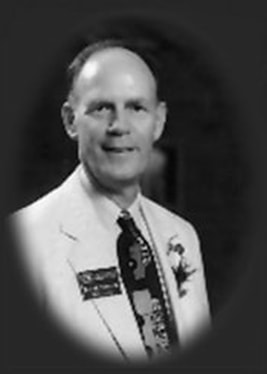
His Story
Ross M. Burkhardt began his career in service two days after graduating from Dartmouth College in 1962, when he joined the Peace Corps as a physical education teacher at an orphanage in Tunisia — coincidentally becoming, alongside his identical twin brother Robert (who served in Iran as an English teacher), one of the first pair of identical twins to serve as Peace Corps Volunteers. He led Operation Crossroads Africa groups to Sierra Leone in 1964 and to Upper Volta (now Burkina Faso) in 1967, earned his Master’s in Education from the University of Pennsylvania in 1965 while teaching seventh-grade social studies in Philadelphia, then returned to his hometown to teach ninth-grade African-Asian Studies at Monroe-Woodbury High School for seven years. In 1972, he and his wife Diane — also a ninth-grade social studies teacher — moved to Long Island and helped found the Shoreham-Wading River Middle School, working alongside noted educator Dennis Littky to build what would become a national model of middle-level education. Burkhardt taught eighth-grade English and social studies there for the next twenty-five years, retiring in June 1997.
A transformative three-week 1980 National Writing Project Summer Institute with Dr. Sondra Perl reshaped his teaching around journals, poetry workshops, and parent writing conferences, and he and Diane were later featured as teachers of writing in Sondra Perl and Nancy Wilson’s “Through Teachers’ Eyes” (Heinemann, 1986). Burkhardt helped found the New York State Middle School Association in 1981 and served as its second president; in 1991 he became the first Teacher Trustee elected to the National Middle School Association’s Board of Trustees, and in 1994 he was elected the association’s president-elect, becoming only the second classroom teacher ever to lead the 56-affiliate, 20,000-plus-member national organization, serving as President in 1995-96. He authored “The Inquiry Process: Student Centered Learning” (1993), co-authored the landmark position paper “This We Believe: Developmentally Responsive Middle Level Schools” (1995) — NMSA’s all-time best-selling publication — and served as final editor of “A 21st Century Research Agenda” (1997).
Even after retirement, Burkhardt remained deeply engaged in middle-level education: serving on the advisory board of The Jefferson School, an alternative middle school for at-risk students in Port Jefferson, New York; appointed to the Board of Trustees of The Ross School in East Hampton; writing two more books; and consulting for Court TV on its “Choices & Consequences” education initiative.
Beyond the Classroom
Burkhardt extended his classroom into the wider world through an extraordinary run of student-produced multimedia projects. Starting in 1972 with “imagine:peace,” a three-screen slide show on international conflict made with six students for the New York State Council for the Social Studies, he went on to create “newyorKids” (1991), “What Does It Mean… To Be Fourteen?” (1974, which toured schools from 50- to 500-seat auditoriums up and down the East Coast), and a string of shows built around Billy Joel’s “We Didn’t Start the Fire,” in which students researched and reset each of the song’s 120 historical references, several of which their classes revisited in subsequent years as “Sparks of a Nation,” “America: The Fire Continues,” and “A World in Flames.” From 1975 to 1997, he directed the annual Eighth Grade Night slide show, in which eight students spent a full school year assembling a 45-minute, three-screen, 1,500-slide tribute to their middle school years, shown to five hundred peers, parents, and teachers each June.
He took his students to education conferences in more than fifteen states as co-presenters, mentored more than thirty student teachers over his career, organized and directed the Leisure Village American Legion Essay Contest from 1975 to 1997, and, after the sudden death of his teaching partner Cliff Lennon to liver cancer mid-year in 1991-92, organized a memorial service in which seventy-five of Lennon’s former students served as readers, musicians, singers, ushers, and presenters. He also raised $8,500 to establish a scholarship in his father’s honor at Eagle Rock School in Colorado, where his twin brother serves as Head of School, and directs half the royalties from his book to a scholarship named for his late teaching partner.
Philosophy Into Practice
Burkhardt believed a teacher’s central obligation was relational: “You can’t make a difference in someone’s life if you don’t have a relationship with them,” he often said, and he structured his entire classroom practice around close, sustained relationships with his students. He described himself as an inventor of “engaging work,” borrowing the phrase from his own mentor and eventual nominator, John Lounsbury, and believed a teacher’s job was never simply to transmit information but to create real, sometimes deliberately ambiguous problems that forced students to stretch, invent, and take ownership of their own learning.
In practice, this meant a classroom built around a shared vocabulary he called “The Distinctions” — respect, trust, appreciation, cooperation, communication, and others — reinforced through rituals like Appreciation & Acknowledgement Day, Lessons Learned, Reflections on Distinctions, and Memory Minutes; a multi-day “Radicals & Tories” Revolutionary War simulation; annual three-day camping trips to open each school year; and an insistence that a teacher must remain “on” as a role model for young people every single day, a responsibility he called demanding but one that kept him young.
“A teacher represents a promise for the future. We serve as role models for generations of young people. How we do our jobs and how we interact with students stays with them for the rest of their lives.”— from his essay, “Philosophy of Teaching”
“Why did I become a teacher? Simply put, to make a difference in the lives of young people. A wise person once said, ‘You can’t make a difference in someone’s life if you don’t have a relationship with them.'”— from his essay, “Philosophy of Teaching”
In His Own Words
“In the classroom kids should be engaged in learning, inventing and creating and working as a community of learners. How can we further the notion of democracy if in our public schools we don’t provide regular and frequent opportunities for all kinds of students to work side by side?”— from his essay, “In the Classroom”
“‘It’s the first day./ In they come,/ some pausing hesitantly at the door,/ wondering and waiting./ Others boldly asserting their presence/ as they stride to seats….’ My poem, ‘The First Day,’ written during the 1980 National Writing Project Summer Institute, became the opening event in ‘a simultaneously shared journey/through days and months ahead.'”— from his essay, “In the Classroom”
“I am a teacher in a family of teachers, including my wife, brother, daughter, mother and sister… I believe it is better to ask forgiveness than seek permission. While the safety and well-being of my students is always paramount, I also know that I need to push the limits if I am going to make a difference with and for them.”— from his essay, “Who Am I? What Makes Me Tick?”
“Marian Wright Edelman says, ‘Service is the rent we pay for living.’ My life is testimony to my belief in that maxim. Teaching was never about the money; rather it was about making a difference in the lives of young people. And not just one, either. I’m committed to affecting the lives of many, many young people.”— from his essay, “Who Am I? What Makes Me Tick?”
“Unfortunately in today’s America, an overemphasis on ‘standards’ is forcing too many teachers to ‘teach to the test’ rather than assist the young adolescent learners in their classrooms. We know what works — smaller classes, group work, cooperative strategies, the writing process, inquiry, heterogeneous grouping, teaming, fewer lectures, and varied assessment activities.”— from his essay, “Educational Issues”
What Others Said
“Ross is the consummate teacher — intellectually able, student-centered, creative, and personable — a prime example of a strong man who chooses to remain in the classroom. Beloved by students, admired by colleagues, Ross is a national professional leader, an exemplary teacher, and a man of integrity.”— John H. Lounsbury, National Middle School Association (Nominator)
“Ross Burkhardt taught social studies and English to eighth graders with a kind of vitality and engagement that was rare indeed… It is hard to exaggerate the positive impact that Ross Burkhardt had on the burgeoning middle school movement, on the quality of educational programs for early adolescents, and on the lives of countless eleven-to-fourteen-year-olds.”— Cary E. Bell, Principal, Shoreham-Wading River Middle School
“During the 1980-1981 school year, the Board of Education gave me a sabbatical leave to visit outstanding educational programs throughout the United States. During that year I visited three hundred classrooms in 142 schools in eighty-six school districts in thirty-five states… None of the three middle schools could compare with the Shoreham-Wading River Middle School and I didn’t see a single teacher who could compare with Ross Burkhardt.”— Richard R. Doremus, Superintendent of Schools, SWRCSD (retired)
“Mr. Burkhardt’s classroom was like none I had ever been in. There were posters and pictures all over the walls, and not a single desk… Mr. Burkhardt is by far the greatest teacher I’ve ever had, and in all honesty may ever have. He learned how to maintain the perfect balance between teacher and friend.”— Jessica Cepelak, Former Student
“On my first job after college I heard about a woman who was so frustrated with the telephone company, she chained herself to the president’s desk until her complaints were answered. Thus inspired, I was determined our two younger children would have Ross Burkhardt as their teacher, or the principal of the middle school would find me padlocked to his desk.”— Lee J. Chinalai, Parent of Three Students