
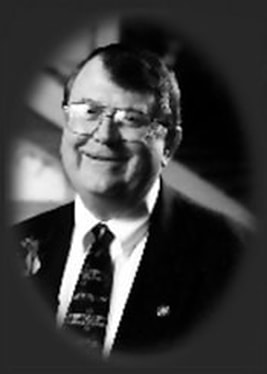
His Story
Ronald Poplau spent thirty-six years in the classrooms of the Shawnee Mission School District, the last decades of them teaching sociology and community service at Shawnee Mission Northwest High School in Kansas. But the shape of his career was set long before he ever stood in front of a class, by a father who could not read.
Poplau’s father immigrated with almost nothing and never learned to read English. He worked with his hands his whole life, determined that his son would have the education he himself was denied. When Ron chose teaching, it was not the path his father might have imagined for him, but it was one his father blessed without reservation. Poplau has carried his father’s dying words with him ever since: “Ron, I love to see you teach.” That sentence became something closer to a mission statement than a memory.
What Poplau built at Shawnee Mission Northwest was less a single course than an entire ecosystem of service. His sociology classes were not textbook exercises in abstract social theory — they were laboratories for civic responsibility, built around the conviction that teenagers become better citizens by doing citizenship, not by reading about it. Students in his classes didn’t just discuss poverty, incarceration, aging, or homelessness; they went and sat with the people living those realities.
In 1991, Poplau formalized that philosophy by founding the Cougars Community Commitment program — C.C.C. — a structured community-service initiative that sent Shawnee Mission Northwest students into nursing homes, shelters, hospitals, and eventually prisons. Over the years C.C.C. grew from a single teacher’s classroom project into one of the most far-reaching student-service programs in the region, generating tens of thousands of volunteer hours and quietly reshaping how a generation of suburban Kansas teenagers understood the world outside their own neighborhoods.
Beyond the Classroom
Poplau’s own volunteer work went well past anything required of a teacher, and it is here that his program’s most distinctive feature took root: his commitment to men and women in prison. For years he volunteered inside correctional facilities, building relationships with inmates — including men serving decades-long sentences — and eventually bringing his students in to do the same. He sponsored parolees as they transitioned back into society, a commitment that in at least one case meant helping furnish an apartment for a man walking free after thirty years behind bars.
That relationship, with a man named Henry Floyd Brown, became one of the defining testimonials of Poplau’s career. Brown, released after three decades in prison, wrote of the day Poplau and his students helped him set up a home of his own — an act of ordinary generosity that, for a man who had spent thirty years with nothing to call his own, was anything but ordinary.
Poplau’s community-service model also reached into gang-intervention work, mentoring young men at risk of the very cycle his prison volunteers had lived through, and into partnerships with the district’s neediest families. His students left Shawnee Mission Northwest having stood inside a prison, sat beside a dying hospice patient, or fed a family with nothing in its cupboards — experiences no classroom lecture could replicate.
Philosophy Into Practice
Poplau’s philosophy of teaching rejected the idea that education could be contained within four walls. He believed a classroom’s real test was whether it changed how a student behaved once the bell rang — whether the lesson survived contact with the world.
“I have never been satisfied with just teaching about the world. I want my students to go out and touch it, to be changed by it, and then to change it themselves.”— Ronald W. Poplau, Philosophy of Teaching
That conviction shaped everything about how he structured Cougars Community Commitment: not as an add-on to sociology, but as the discipline’s proper laboratory. He held that students who had never encountered poverty, incarceration, or aging firsthand could not truly understand the social forces they were being asked to analyze — and that empathy, like any other skill, had to be practiced.
“Compassion is not a subject you can test on a Friday quiz. It is something you build one visit, one handshake, one act of service at a time.”— Ronald W. Poplau, Educational Issues
In His Own Words
“My father never read a book in his life, but he understood something about education that a lot of people with advanced degrees miss: it only matters if it makes you useful to someone else.”— Professional Biography
“The day my dad told me he loved to see me teach was the day I stopped thinking of this as a job and started thinking of it as the thing I was supposed to do with my life.”— Who Am I / Who Are You
“I didn’t want my students memorizing statistics about poverty and crime. I wanted them sitting across a table from a man who had lived it, so the statistics would never again be just numbers to them.”— In the Classroom
“Some of my proudest students are men I met inside a prison, not inside my classroom. Teaching was never supposed to stop at eighteen-year-olds who happened to be enrolled at Northwest.”— Outside the Classroom
“If Cougars Community Commitment outlives me, it won’t be because of anything clever I did. It will be because I got out of the way and let teenagers discover they were capable of more than anyone had told them.”— Educational Issues
What Others Said
“Ron Poplau does not simply teach sociology. He builds citizens. I have never seen a program transform both the students who give service and the community members who receive it in quite the way Cougars Community Commitment has.”— B. Lucinda Eppard
“In all my years in education, I have rarely encountered a teacher whose classroom extends so far beyond its own walls. Mr. Poplau’s students serve this community in ways most adults never do.”— Evelyn Ewing
“It is my privilege to write in support of Ron Poplau’s consideration as a 1999 inductee to the National Teachers Hall of Fame. Few educators have had the impact on this school and this community that he has.”— Bill Harrington, Principal, Shawnee Mission Northwest High School
“His students don’t just learn about social issues from Mr. Poplau — they live them, for a few hours at a time, in nursing homes and shelters and, remarkably, in prisons. That kind of teaching changes people permanently.”— Beth A. Jantsch
“Ron Poplau represents everything this district hopes a teacher can be: rigorous in the classroom and relentless in his belief that students owe something back to the community that raised them.”— Marjorie P. Kaplan, Superintendent
“I was one of his students years ago, and I can say without exaggeration that his class changed the direction of my life. He taught us that compassion is a discipline, not just a feeling.”— Stephanie M. Nash, Former Student