
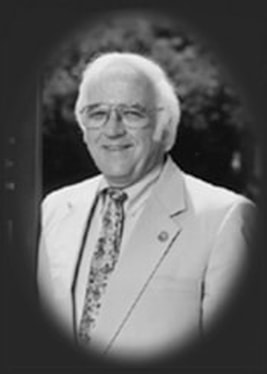
His Story
Robert E. Coleman studied first at St. Thomas Seminary and then earned his B.A. from St. Mary’s Seminary and University before completing an M.A. and a Sixth Year Certificate at Fairfield University. He began his teaching career at Crosby High School in 1960 and Watertown High School in 1963, teaching part-time at Sacred Heart High School and Mattatuck Community College along the way, before joining Regional School District 15 in 1965 — where, for the next twenty-nine years, he taught English and Social Studies in a two-room basement of an old elementary school to twenty “At-Risk” students who, in his words, “have experienced every stress that one reads about in the news.”
His students carried histories of abuse, addiction, grief, and violence, and the two things they all shared, he wrote, were pain and a new-found desire to do well in school. When budget cuts threatened to cancel the program, his co-teacher nominated him for local Teacher of the Year, hoping the publicity would help save it — and it worked: Coleman was named the 1992 Connecticut Teacher of the Year, the program was saved, and something no one anticipated happened next. His students were interviewed by state radio and television, featured in newspaper articles, and invited to ceremonies and receptions. They stopped isolating themselves on the school bus, afraid of being called “losers.” Their program, and their struggle to rebuild their shattered lives, was validated.
Honors followed in a remarkable wave: the 1990 Apple-sponsored Special Education Technologist of the Year award for his “One Room Electronic Schoolhouse,” a 1992 International Space Academy Fellowship from NASA and the U.S. Space and Rocket Center (complete with simulated astronaut training, a parachute jump, and an ocean rescue by helicopter), the 1993 Excellence in Education Award from Burger King Corporation, a finalist spot for the Walt Disney Company’s American Educator Award, fellowships from the Korea Studies Council International, the National Endowment for the Humanities, and the Institute for Educational Leadership’s Educational Policy Fellowship Program, and the 1993–94 National Educator Award from the Milken Family Foundation. In his final years teaching, the Disney Channel selected his program for a video profile, and a Hollywood producer spent two days filming and interviewing his students.
Beyond the Classroom
Coleman brought his students far beyond a two-room basement. He addressed the Connecticut state legislature on laws affecting young people’s freedom and responsibility, met with Senator Dodd’s staff in Washington, D.C. about the plight of the poor in Mexico, and, as president of Human Rights Mexico and a board member of Vamos! — an international agency funding self-help projects for indigenous peoples in Latin America — was instrumental in prodding the U.S. State Department and Embassy into investigating abuses in La Huizachera, Mexico, which led to a group of peasants regaining land after several had been killed in an illegal eviction. He served on the international board of directors for the Space Academy’s science and education initiative, the Scholarship Committee for the U.S. Space and Rocket Center, and the editorial review board of the Center for Teaching Resources, while remaining active locally as Secretary of the Watertown Housing Authority, a Justice of the Peace, and a three-term member of his local Democratic Town Committee.
He was a published author and frequent speaker, writing “The Need for Effective Schooling” for the Connecticut Education Association, “On the Evolving Role of Boards of Education” for the Connecticut Association of Boards of Education Journal, and contributing to Robert Slavin’s textbook Educational Psychology, all while speaking to over 20,000 teachers, parents, and community leaders across the state in just a few years. With his students, he wrote “A Pledge of Allegiance to the Children,” which they recited together at teacher conferences: “I pledge allegiance to the children of the United States of America and to the future which is their birthright. Every child, embraced by God, irreplaceable, with equality and hope for each.”
His generosity toward students became legend at his school. When a seventeen-year-old told him she had never had a birthday party because of her family’s shame over their living conditions, he threw a party to end all parties, and every student’s birthday has been celebrated since. When a student mentioned excitedly that his mother had bought him a frozen turkey TV dinner for Thanksgiving, Coleman bought a real turkey and cooked it outside over a wood fire — a gesture that grew into an annual Homecoming Day for program alumni, complete with a football game against former teachers and, in its most recent year, a hundred guests and three turkeys, with Coleman arriving before 5:00 a.m. to start the fire.
Philosophy Into Action
Coleman traced his philosophy of teaching to Emily, his very first student, whom he met as an undergraduate philosophy major fulfilling a community-service requirement. Emily was 47, severely retarded, and had spent 34 years confined to a locked cell in a state training school after accidentally causing her mother’s death at age thirteen. Coleman was required to prepare her for her first communion, and their weekly classes — held at first inside her cell, behind three locked steel doors — continued for two years, during which the matron guarding her eventually disappeared and the cell door was left unlocked. On their last day together, held outside for the first time in Emily’s 34 years at the institution, she knelt in the grass, asked what it was, and began to dance and sing in happiness.
He built his classroom’s structure around psychologist Erik Erikson’s framework of adolescent identity confusion — time, self-image, roles, work, relationships, involvement, and values — offering his at-risk students a secure but demanding structure, immediate and tangible results for their work, positive role models among older students and adults, and, above all, a sense of belonging and trust. He believed that once exposed to this alternate approach, at-risk students became excited about their own potential, learning that their differences were what made them truly valuable to themselves and to society.
“I learned that not everyone knows what grass is and that a good teacher shouldn’t assume that everyone does. I learned that there must be joy in the relationship between teacher and student before either teacher or student can really begin to learn… Emily taught me the true joy of teaching is allowing yourself to be taught.”— from his essay, “Philosophy of Teaching”
In His Own Words
“There have been so many Emilys… We are part of that miracle that makes princes out of frogs. The important question, however, is, ‘Which one is the frog and which is the beautiful maiden?’ I think Emily kissed me.”— from his essay, “Philosophy of Teaching”
“One cause of the crisis in American education is the fact that its children are in pain… Like the ancient Chinese, I, too, see hope. The most important contribution we can make for the well being of children is to focus the national debate on the causes of the malaise rather than the symptoms.”— from his essay, “Educational Issues”
“As I near the end of my teaching career, I am so thankful to the students who have taught me more than I ever taught them. No obstacle in life is so great that it can not be overcome.”— from his essay, “Professional Biography”
What Others Said
“To say Bob Coleman is an excellent English teacher would be misleading… The truth is that Bob is so much more than any part of these limiting academic subject labels… Bob invites each student into the joys of active learning. No one is ever abandoned.”— Joseph Calabro, Colleague and Friend
“Bob has an exquisite gift for motivating the disenfranchised student to turn-on, connect, achieve, and build a self-confidence based on real success… Whether or not Bob Coleman is selected for the National Teachers’ Hall of Fame, he is already there as far as his students are concerned. And that is what counts!”— K. Michael Hibbard, Ph.D., Assistant Superintendent (former Principal)
“There are many proficient and dedicated leaders in education. There are also leaders who, because of their commitment to education and students, must be considered outstanding. Mr. Coleman is outstanding.”— Louis J. Esparo, Ph.D., Superintendent of Schools
“Mr. Coleman is a teacher par excellence, who has won numerous awards for his work with students… He has proven himself to be a very exemplary representative of the best of teachers, a true ‘Super Star’ in the profession.”— Joan M. Quilter, Ph.D., Director of Student Services and Nominator
“Bob Coleman is more than a teacher. He is a mender of broken lives; the lives of his students and of all those who come in contact with him. He embraces each of these lost children, discovers what is great in them and teaches them to love themselves… In conclusion, no one could possibly be more deserving of this honor than Bob. He is the consummate teacher of those most in need of knowledge.”— Joan G. Ripke