
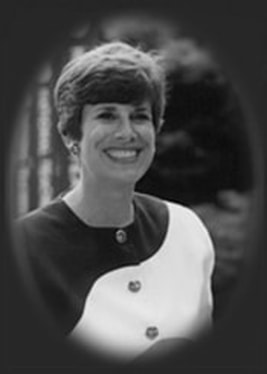
Her Story
Leslie Black began her career after an elementary education degree, teaching a “junior primary” buffer class between kindergarten and first grade — an unstructured setting where she focused on helping students discover themselves without the pressure of workbooks. In 1968–69 she spent a year and a half teaching a full-year Head Start class in a Southern ghetto, an experience that convinced her that at-risk children needed room to reflect and make meaning of their own experiences, not a “pressure-cooker” academic pace. Working closely with parents of underprivileged children there shaped habits she carried through her entire career: parent workshops, home visits, and — above all — listening to children “with every fiber of my being.”
Her career took her across the country and the world: sixth grade and migrant education in Ohio, graduate study in creativity and language development at Utah State University, a year teaching in Utah, and a full year living with an Australian family in 1981 while she completed graduate coursework there. She arrived in Tuscaloosa, Alabama in 1987, spending her first year as a Montessori teacher before joining Woodland Forrest Elementary School in 1988, where she has taught kindergarten ever since.
In 1992 alone she was awarded three of Alabama’s most prestigious teaching honors: elementary division inductee into the Alabama Teacher Hall of Fame, sponsored by Jacksonville State University; the 1991–92 Alabama Elementary Teacher of the Year, sponsored by the Alabama State Department of Education; and one of three state finalists for the Presidential Award for Excellence in Mathematics Teaching at the elementary level, sponsored by the National Science Foundation.
Beyond the Classroom
Each week, Black draws a student’s name from a hat to be “Spotlighted” — the child’s family is invited to visit the classroom, and the student decides whether Black will come to their home for dinner or they’ll come to hers, usually followed by a board game and a story. In December she and her students host a formal Holiday Tea for families, planning the menu and practicing etiquette together, and she has led classroom overnights at the school tied to units like stargazing, including a trip to the University of Alabama observatory followed by a “camp-in” with roasted hot dogs.
She served as Adopt-A-School chairperson for Woodland Forrest, building a partnership with the Tuscaloosa Chamber of Commerce and AmSouth Bank, and has been a resource teacher at the Children’s Hands-On Museum since 1989, teaching Saturday parent-and-child classes called “Playmates” and leading week-long summer workshops such as “Music Makers” and “Music Travelers.” She sings with the Tuscaloosa Community Singers, reads the children’s story weekly at her Unitarian Universalist Fellowship, and her family has hosted foreign students from Guatemala and Italy, along with a visiting kindergarten teacher from Japan.
Her classroom itself reflects her love of the natural world: a rotating menagerie that has included guinea pigs, finches, a salamander, a crab, fish, a rabbit, and chickens, alongside several dozen animal puppets she uses for storytelling — and, as one colleague noted, it’s not uncommon to walk by her room and hear students singing along as she accompanies them on the ukulele.
Philosophy Into Practice
Black believed that children should feel safe making mistakes, and that a good teacher nurtures “fragile and developing egos” rather than pushing children toward speed or performance. That philosophy showed up directly in how she handled a student who fell behind after missing school:
“John completed his worksheets, but due to his days missed, fell behind in his classroom work level. He became frustrated and discouraged. Mrs. Black sensed John’s frustration and eagerly expressed a desire to have John stay after school one day for a ‘party’ as she termed it… His confidence level was boosted and he attacked new words and problems with eagerness and ease from that afternoon on. She made him feel special.”— Sherry L. Marshall, Parent
In Her Own Words
“I do believe that children are the hope for the future and that the seeds we plant in their hearts and minds will forever live with them… We should encourage children to take risks, to reach out beyond the known and seek new meanings, to have courage to explore and experience, to keep time for wonder and reflection.”— from her essay, “Philosophy of Teaching”
“I strive to be the kind of teacher Kahil Gibran describes in The Prophet: ‘If he is indeed wise he does not bid you enter the house of his wisdom, but rather leads you to the threshold of your own mind.'”— from her essay, “A Classroom Teacher”
What Others Said
“I can think of no one who has brought more enthusiasm, positive energy and endless creativity to the classroom than has Mrs. Black. One only has to visit her classroom to catch the excitement for learning that her students obviously feel.”— Thomas E. Ingram, Jr., Superintendent, Tuscaloosa City Schools
“We discovered in Leslie Black far more than ‘simple’ competence; we found a teacher who has a true gift and gives it daily – a joyful experience… We weren’t asked to write this letter, just to have Molly write one. But in this day and age when education, and more importantly teachers, must sit back stage to so many other interests, we felt that it was important to recognize the efforts.”— Janis and Steve O’Donnell, Parents
“It is not uncommon to enter her classroom any time of the day and hear the students joyously singing accompanied by her on the ukulele… As the saying goes, ‘To teach is to touch a life forever.’ Leslie Black has touched my life and the lives of hundreds of boys and girls in a very special way.”— Peggy Hogue, Counselor, Woodland Forrest Elementary School
“Leslie’s professionalism extends far beyond her regular classroom responsibilities… Often Leslie, beaming with pride and sheer joy, comes to share with me a creative activity done by one of her students.”— Shelley E. Jones, Principal, Woodland Forrest School