
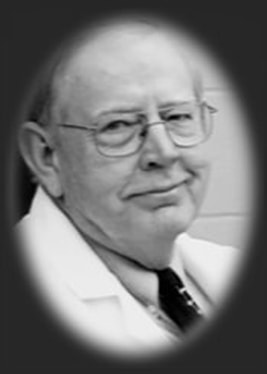
His Story
Ken Bingman grew up on a farm in southwest Missouri, the youngest of four boys, where his family’s livelihood depended on livestock and crops. That, and two older brothers who became biology teachers, gave him a thirst to understand the natural world. He earned a bachelor’s degree in science from the University of Kansas (1963) and a master’s in biology from Emporia State University (1967), plus 61 hours of further graduate work. He began teaching biology at Wyandotte High School in Kansas City, Kansas, in 1963, moved to Shawnee Mission West High School in 1967 and since 2001 has taught at Blue Valley West High School in Overland Park.
When he took over AP Biology at the new Blue Valley West in 2003, seven students enrolled. In 2008 the class had 110, far faster than the school’s overall growth, and his students achieve the state’s Standard of Excellence each year. He was nominated by the College Board in 2008 for the Siemens Award for Excellence in Teaching AP Biology.
His honors include a Presidential Award for Excellence in Science Teaching (1984), the Kansas Governor’s Award for Excellence in Teaching (1978), induction into the Kansas Teachers Hall of Fame (1999), a Fulbright Memorial Fund teacher to Japan, a place on the USA TODAY All-USA Teacher Team (1993), the National Space Educator of the Year and finalist for NASA’s Teacher in Space program, and the Blue Valley School District Master Teacher (2008).
Beyond the Classroom
For more than forty years Bingman has mentored students on research projects entered in Westinghouse and NASA competitions, the Kansas Junior Academy of Science and the Greater Kansas City Science and Engineering Fair; at least five of his students won awards at international science fairs. The fair named him its Teacher of the Year in 2008. He has led student science expeditions to China (botany, 1988), Russia (aerospace, 1989–90), Kangaroo Island, Australia (zoology, 1995) and Hawaii (rain forest ecology, 1998), and has traveled to 26 countries with students. He was a guest teacher at St. Jude’s School in Tanzania in 2007.
In 1998 he helped lead a national expert committee for the Food and Drug Administration and the National Science Teachers Association that created Science and Our Food Supply: Investigating Food Safety from Farm to Table, a curriculum used by more than 7,000 trained teachers and an estimated two million students. He still trains teachers at yearly workshops in Washington, D.C. He also helped write the National Science Education Standards, served four years on the Kansas State Board of Education science standards writing committee, and worked with the Biological Sciences Curriculum Study on an evolution module mailed to all 52,000 U.S. biology and life science teachers.
Philosophy Into Practice
Bingman believes “students are the most important people in class and in school” and that the teacher’s job is to love teaching and like the students. His classroom is filled with a hundred or more student-built models, from DNA molecules eight feet tall to cell organelles, that must meet strict scientific guidelines and are so good that other teachers borrow them. Graduates come back to point out their models to current students.
He teaches science “as a verb rather than a noun” and uses inquiry and cooperative learning, concept maps, learning-log journals, interviews and formative assessment, which he says should be part of learning, “not something that is separate and comes at the end.” He says his guiding principle is that “given the right environment, all students can and do learn,” and that the greatest things he has learned about teaching in 46 years, he learned from students.
“Students are the most important people in class and in school.”— Ken Bingman
“The bottom line for the evaluation of teaching has to be how much the students are learning.”— Ken Bingman
In Her Own Words
“If I had it to do all over again, I would choose teaching again.”— Ken Bingman
“Often, they do not care so much about what you know until they find out how much you care about them.”— Ken Bingman
“Student failure is not an acceptable option.”— Ken Bingman
“The neatest and greatest things I have learned about teaching during 46 years, I have learned from students.”— Ken Bingman
“Students should feel that we are partners in the learning process.”— Ken Bingman
What Others Said
“For over thirty years, I have heard from teachers and students “Bingman is the Best.””— Fern Bretch, nominator and colleague
“If I were to summarize Ken, I would do so by calling him a Master Teacher.”— Tony Lake, Principal, Blue Valley West High School
“Ken’s ability to relate to and motivate students is unsurpassed.”— Superintendent Trigg, Blue Valley School District
“Mr. Bingman has always put youth first.”— Katie Bieker, former student
“Ken has been invaluable to FDA’s effort to add this curriculum to schools nationwide.”— Louise Dickerson, M.S., Education Program Manager, U.S. Food and Drug Administration
“Mr. Bingman’s contributions to science education are leaving a positive and indelible mark on educators across the country.”— Albert S. Byers, National Science Teachers Association