
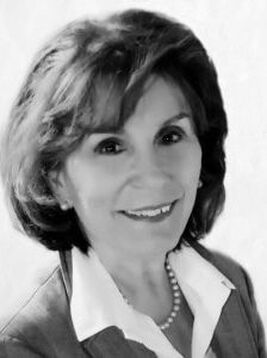
Her Story
Cyrla Janet “Jan” Alderson has taught science for 45 years: 31 at Pittman Hills Junior High and Raytown South High School in Missouri, then at Shawnee Mission South High School in Overland Park, Kansas. Her motto is “Eat. Sleep. Teach.” She calls her classroom a “learning ecosystem” that is “complex, skill building, fun, real world and diverse,” with a greenhouse, student-made virus models hanging from the ceiling and a daily sunrise and sunset time on the board.
Her biology classes start with ecology and the outdoors instead of chemistry, and she says she is “the guide on the side.” Students write in nature journals, test noise levels with a borrowed sound meter all over the school, shadow medical professionals and grow herbs in a portable greenhouse, and over four dozen community experts talk to and mentor them. A student’s project on ozone and soybean growth led to a biology scholarship. Each year a couple dozen of her students win awards, and one reached the national Junior Stockholm Water Prize contest.
Her former principal wrote that her resume is “without doubt the most impressive one I have ever laid hands on, with the second best one a country mile behind.”
Beyond the Classroom
Alderson created the University of Missouri-Kansas City High School Science, Mathematics and Technology Institute, a three-year program of research, college courses and community service that gained national recognition, and she started Science Olympiad in Missouri and Kansas. She founded the Science Knowledge Bowl at Rockhurst University, a young women’s science challenge at Avila University and the Raytown Outing Club, and she edited InterACTION, a science education newsletter mailed to schools in both states.
Her ninth-grade biology students noticed that Kansas had no state grass, and over five years they won support in both houses of the legislature; in 2010 the governor signed the bill naming little bluestem as the Kansas state grass. She was one of five national Presidential Awardees for Excellence in Science Teaching in 1991, was inducted into the Mid-America Education Hall of Fame in 1997, and has been listed in Who’s Who in American Education.
Philosophy Into Practice
Alderson’s mission is to nurture “a strong interest in science, develop process skills and intellect as well as instill responsibility, and respect for others and the environment… and to get things done on the local, state and national levels.” She believes that “when students enjoy learning, the amygdala opens up and the flow of learning begins.”
She sees science first as a process, “a way of knowing,” and argues that students retain more from hands-on, minds-on work than from memorizing. A sign in her room quotes The Last Lecture: “Smart isn’t enough.” She hopes assessment can move students toward “authentic accountability, thus fostering personal responsibility for learning.”
“Eat. Sleep. Teach.”— Jan Alderson
In Her Own Words
“My approach to teaching has been to use a wide variety of learning experiences to teach science.”— Jan Alderson
“Science is real world, understandable, a process, and is fun.”— Jan Alderson
“All students are gifted in their own ways.”— Jan Alderson
What Others Said
“Jan’s new educational paradigms, energy, and passion to teach science has had an impact on local, state and national educational communities.”— Sally E. Bell, nominator and colleague
“I have to say that Mrs. Alderson’s resume is without doubt the most impressive one I have ever laid hands on.”— Norman D. Brooks, retired principal, Pittman Hills Junior High
“She is probably the best science teacher I know.”— Judith L. Lemons, Ph.D., Hannibal LaGrange University
“Her love of learning is contagious!”— Cathryn C. Linney, former student
“Even though I, too, have won many teaching awards, I always came away from those visits duly impressed.”— Charles J. Wurrey, Ph.D., University of Missouri-Kansas City