
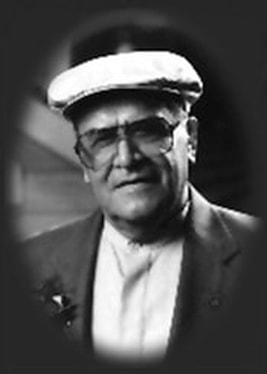
His Story
Jaime Escalante was born in 1930 in La Paz, Bolivia, to two teachers who worked in the small Aymara Indian village of Achacachi. He followed them into the profession and spent twelve years building a reputation for excellence teaching math and physics in Bolivia. In 1964, he moved to the United States — but because his Bolivian teaching credential did not transfer, he could not teach in an American classroom. He worked first as a busboy, then a cook, then an electronics factory technician while earning a new bachelor’s degree in mathematics (Cal State LA, 1972) and a standard teaching credential (1974), on top of his 1955 Bolivian teaching credential from the Universidad Mayor de San Andrés and an associate’s degree from Pasadena City College.
In 1974, Escalante was hired as a basic mathematics teacher at Garfield High School in East Los Angeles, a struggling inner-city school where administrators doubted low-income, mostly Mexican-American students from the barrio could succeed in rigorous coursework. Escalante disagreed. In 1982, he led a group of eighteen students through a calculus course and the Advanced Placement exam — and their scores were so high that the Educational Testing Service suspected them of cheating, subjecting the students to renewed scrutiny before their scores were ultimately upheld. Under that scrutiny, observers found not fraud but an exceptional teacher, and his story became the basis for the 1988 film “Stand and Deliver,” starring Edward James Olmos as Escalante, which turned him into a national symbol of what rigorous expectations could achieve regardless of a student’s background.
Escalante went on to host “FUTURES with Jaime Escalante,” an instructional PBS television series produced by the Foundation for Advancements in Science and Education (FASE) introducing students to math- and science-based careers; it became the most popular classroom program in PBS history and won more than fifty awards, including the George Foster Peabody Award, broadcasting’s highest honor. He also appeared in the FASE specials “Math… Who Needs It?!” and “Living and Working in Space: The Countdown Has Begun,” and collaborated on the series “Interactions: Real Math-Real Careers.” His honors included the Presidential Medal for Excellence in Education, the Andrés Bello Prize from the Organization of American States, the “Free Spirit” Award from the Freedom Forum, and honorary doctorates in humane letters, science, education, and the humanities. After Garfield, he taught at East LA Community College and then Sacramento’s Hiram Johnson High School, where he taught algebra and calculus until his retirement from full-time teaching in the spring of 1998 — after which he continued a full schedule of national speaking engagements and educational projects.
Beyond the Classroom
Escalante’s impact reached far beyond his own classroom. At Garfield, thirty-five of his former students returned to the school as teachers themselves, becoming role models within a faculty of 180 serving a student body of 4,000 — helping transform Garfield into a nationally ranked math powerhouse, top ten in the country in the number of students taking AP exams. He personally raised money from private, corporate, and federal sources to make sure his students were properly nourished, believing nutrition was inseparable from academic success, and he regularly called or visited students’ parents at night and on weekends to enlist their support for his program’s demanding schedule.
His mentorship extended well past graduation: former students went on to become engineers, doctors, lawyers, teachers, and business professionals, including students who dedicated doctoral dissertations to him and returned decades later to credit him as the single most influential figure in their intellectual development. His work with FASE on “FUTURES” and related PBS programming carried his teaching methods and message to a national audience of students who would never sit in his classroom, while his reputation as a mentor, coach, and father figure to struggling students remained deeply personal and local.
Philosophy Into Practice
Escalante’s philosophy rested on a single Spanish word: ganas — desire, the will to succeed. He never used placement tests or checked IQ scores for his Advanced Placement program, believing that desire, not innate “giftedness,” was what qualified a student for rigorous work. He rejected as cynical and destructive any effort to create special, watered-down programs that asked minority students to “adjust to their limitations,” insisting instead that education was the great equalizer and that racism was best fought with rigorous academics, not lowered expectations.
In practice, this meant intense, color-coded preparation for every lesson of the year before the school year even began; a “team approach” borrowed from athletics, complete with caps, jackets, and practice schedules as rigorous as a championship football team’s; contracts signed by students, their parents, and Escalante himself binding everyone to summer programs, daily homework, and Saturday study sessions; and a refusal to let any student leave with an unresolved question, even if it meant intervening directly in a student’s home life.
“I am involved in education because children are the best hope of the future. If I can help them find the ganas in themselves — the willingness to work hard and sacrifice, the desire to succeed — then that is a big plus for them, for their families and for their community.”— from his essay, “Philosophy of Teaching”
“I never used placement tests for my Advanced Placement programs. I never checked IQ’s. There was no need to be ‘gifted.’ If a student has desire, he or she is gifted enough for me.”— from his essay, “Philosophy of Teaching”
In His Own Words
“I am also a teacher because I despise racism. Racism can have many faces. Too often, I have encountered kindly bureaucrats who suggest that inner-city schools need to place greater emphasis on auto shop and less on academics, teachers who snicker at the thought of trying to teach calculus to minority youth.”— from his essay, “Philosophy of Teaching”
“Racism is best fought with education. Education is the great equalizer. My kids are proof enough — they have gone on to the best colleges and universities in the country, and on to professional success.”— from his essay, “Philosophy of Teaching”
“I refuse to give up on my students. I set high standards and I expect my students to meet them. If we expect students to be losers, they will be losers, if we expect them to be winners, they will be winners.”— from his essay, “Educational Issues”
“The truth is that I am only the coach — and the coach is only as good as his team.”— from his essay, “Educational Issues”
“You do not enter the future — you create the future. The future is created through hard work. This means teachers must teach, students must do the work, and parents must take an active interest in their children’s schoolwork.”— from his essay, “Educational Issues”
What Others Said
“Having studied and observed many of the best teachers in America for over a decade, Escalante’s name rises to the top. His deep understanding of Mathematics — mastered in two languages, high standards, and motivational methodology help students create ‘GANAS’ — an urge or desire to succeed.”— Dusti Howell, Nominator
“During the seven years that I worked with Mr. Escalante, I was routinely impressed by his tremendous love for teaching and his compassion and ability to ‘touch’ every student who entered his classroom… At Hiram Johnson High School he stood and he delivered.”— Arthur A. Benjamin, Principal, Hiram Johnson High School
“In 1982 Escalante led a group of eighteen students through a calculus course, in spite of the doubts the administration had. His students — mostly from low-income Mexican-American homes — tested so high in the rigorous Advanced Placement exams that they were suspected of cheating… Mr. Escalante has made an indelible imprint on the high school, a school he helped raise in stature in his tenure of more than 25 years.”— Manuel F. Campos, Ph.D., University of California, Berkeley (Former Student)
“My Background is one that many parents would not be proud to speak of. It is one filled with poverty, no positive role models and no sense of direction… Through Mr. Escalante’s commitment and persistence, I was able to experience tremendous results, which include sharing experiences with others through public forms, teaching others and being the first from my ‘neighborhood’ to graduate from college.”— Steve Robles, Former Student (1983-1986)
“As a colleague, Mr. Escalante was the most dedicated and caring teacher I have ever met. He did not hesitate to give up his spare time, even his lunch, to help his students… His instructional crafts was incomparable and at times his charisma was rather magical.”— Angelo A. Villavicencio, Math Instructor, Ex-Colleague