
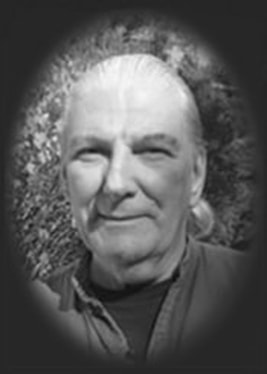
His Story
Dr. Gerard T. Brooker spent forty years in the classroom, the last twenty-five of them as an English teacher and eventual Division Coordinator of the English Department at Staples High School in Westport, Connecticut — a role he took on in 1973 after earlier stops teaching English at South Huntington, Northport, and Kings Park public schools on Long Island, Bergen Catholic High School, and St. Cecilia’s Elementary School. He held a bachelor’s degree in philosophy and teaching from Iona College and a Master of Arts in English, a Master of Science in Educational Psychology, and an Ed.D. in Curriculum and Teaching, all from St. John’s University, a course of study he pursued over two decades even as he continued teaching full time.
Brooker’s honors reflect a career built as much on humanitarian leadership as on classroom instruction: the Martin Gandhi-Martin Luther King Peace Award and the Salutes Award from the Connecticut Education Association, the National Education Association’s Peace and International Understanding Award (presented for “furthering the cause of international understanding” and “offering tangible evidence of efforts to chart a course for world survival”), Connecticut’s Governor’s Award in five separate years, the Jefferson Award for American Institute for Public Service, and recognition as an Outstanding Alumnus of St. John’s University and a Humanitarian Award recipient from his alma mater, Iona College. In 1996, in his fortieth year of teaching, the state of Connecticut selected him to represent it at the China-U.S.A. Conference on Education in Beijing.
Brooker traced the origin of his own commitment to teaching back to a single act of kindness: a third-grade teacher who once called him, a shy child, up to her desk, told him she was placing a cocoon she was holding into her desk drawer for him, and promised that one day it would come to life. Sometime later she called him back, opened the drawer, and a butterfly flew out. He never forgot the moment, and it became the private measure by which he tried to teach every year afterward — reaching, as she had reached him, for the potential hidden inside a reluctant or overlooked student.
Beyond the Classroom
Brooker’s community and humanitarian work extended far beyond Westport. Twenty years before his nomination he founded Youth Ending Hunger (“YEH”) at Staples High School, a club that for over six years spearheaded a statewide program called “The Week to End Hunger in Connecticut,” in which more than 26,000 students across 195 Connecticut schools raised over $23,000, collected thousands of coats and sweaters, and gathered roughly 28,000 cans of food. His students regularly cooked meals delivered to the local Gillespie Center soup kitchen, ran winter coat drives, held Christmas parties for children whose parents were dying of AIDS, and visited nursing homes at the holidays. He founded student chapters of Amnesty International at Staples and organized monthly dinners at the Westport soup kitchen with groups including Save the Children, Heal the Children, Friends of Children, and AmeriCares.
His international work was equally ambitious: he organized and led Staples student delegations to a 1995 International Peace Conference in Hiroshima and Nagasaki, Japan, marking the fiftieth anniversary of the atomic bombings, bringing together 225 students from around the world with a thousand Japanese students — a project for which Nobel Peace Prize laureate Elie Wiesel agreed to serve on Brooker’s board of advisors, and which actor Paul Newman helped finance through Newman’s Own. Brooker also took students to Russia during the Cold War and to China, adopted Reseda High School in earthquake-stricken California as a sister school in 1994, helped raise funds for the Heartland Scholarship Fund after the Oklahoma City bombing and for victims of Hurricane Andrew, and established a fund for migrant children affected by 1993 flooding in the South. Fourteen years earlier, he had helped found the Young Playwrights Festival of Connecticut, giving students a public stage for original plays addressing poverty, prejudice, and bias.
Philosophy Into Practice
Brooker’s teaching philosophy centered on refusing resignation — his own and his students’. He believed a teacher’s task was to root students in skills and in the wonder of language while relating literature directly to a world that was, in his words, “really fast becoming a village,” and he insisted that knowledge divorced from action was “not entirely worthy of us.” His personal credo, borrowed from his own college years, was simply “To teach and to do” — a belief that the classroom and the community were not separate spheres but a single continuous act of education.
In practice this meant unusual, often visceral teaching methods: bringing back rocks from Dachau for students to touch while studying the Holocaust, or lava rocks from Iceland, Mount St. Helens, and the Galápagos to accompany ecology units, or roof tiles blown into Hiroshima’s Ota River by the atomic bombing. He had students write to a homeless man in town, bake pies for people with AIDS, fast for a day to understand hunger, or give up television for a month and journal the experience — and, to make a point about hunger, he once parachuted from 3,000 feet to raise money for a local soup kitchen.
“I am a teacher because I want to have a life that matters, that has meaning and purpose… Being a teacher means that I must never allow my students to live in resignation, either about themselves or the world in which they live.”— from his essay, “Philosophy of Teaching”
“Teaching is a lofty responsibility. It is an art and a craft. The art without the craft is mere show and the craft without the art is mechanical. When successfully fused, teaching is an artistic craft that can inspire and even transform students over time.”— from his essay, “Philosophy of Teaching”
In His Own Words
“Ironically, it was in the aftermath of the death of one of my students that I came to know more fully how effective I could be in their lives… His dad told me that two weeks before he died Chuck had gone through his own memorabilia in order to select a few for burial with him… he chose an essay he had written in my class years before.”— from his essay, “Professional Biography”
“We have a motto: ‘Throw your pebble into the pond’, and watch it ripple out.”— from his essay, “Professional Biography”
“We try to create a tsunami, yet we’re willing to settle for waves. Even a drizzle will eventually soak in. In and out of the classroom, I encourage each of my students to refuse to live in resignation as that is the beginning of despair.”— from his essay, “Who Are You? What Makes You Tick?”
“In The Tales of Hasidim it says that in the end I will not be asked ‘Why were you not Moses, the savior?’ Rather, I will be asked ‘Why were you not Dr. Brooker, the teacher?’ I want to be able to answer ‘I was.'”— from his essay, “Who Are You? What Makes You Tick?”
“A few years ago I was walking with my family on a beach in Oregon, 3000 miles from home. Suddenly, a young man ran up to us, shouting my name. He had been my student eight years before. He reminded me how I had encouraged him not to despair about his drinking and to never give up. He told me that he had been sober for over a year.”— from his essay, “Educational Issues”
What Others Said
“One person really can make a difference. Dr. Gerard Brooker is one of them! In his teaching, leadership, and determination, he has helped thousands around the world empower themselves and others to defeat ignorance, apathy, prejudice, and early death. He is one of the most influential forces in education today!”— Thomas Tracey Fallon, NTHF Inductee 1997 (Nominator)
“It is with great pride and privilege that I write to you in support of Dr. Gerard Brooker’s nomination… Gerry has received three human and civil rights awards from CEA… In addition, Dr. Brooker has received among the highest awards that NEA can bestow—a national Human and Civil Rights Award.”— Daria M. Plummer, President, Connecticut Education Association
“Jerry has spearheaded the planning and design of many new curricular efforts at our school including the implementation of such courses as African-American Literature; American Literature/U.S. History collaboratives as well as the infusion of American Indian, Hispanic and Asian Literature into the curriculum.”— Gloria Rakovic, Principal, Staples High School
“I first met Gerry a number of years ago when I visited Staples High School to address his Youth Ending Hunger club… For six years this club spearheaded an effort called, ‘The Week to End Hunger in Connecticut.’ During that time, more than 30,000 students became involved to end hunger in our state.”— The Honorable Christopher Shays, Member of Congress, Fourth District, Connecticut
“My personal acquaintance with him goes back to 1995 when he asked me to become a member of his Board of Advisors for the 1995 Hiroshima Peace Summit which he was organizing… The conference was a success, with 225 students attending from around the world, joining with one thousand students from Japan.”— Elie Wiesel, University Professor, Boston University; Nobel Laureate
“I have known for a long time about his work as a teacher with children in our community and in the world, and through Newman’s Own, have helped finance several of his international initiatives designed to provide forums for children to understand each others’ cultures.”— Paul Newman, Actor and Supporter
“Two years ago I had the delightful experience of being a student for a semester in Dr. Jerry Brooker’s Contemporary Issues class. There was magic in that classroom, enough magic to help students who felt apathetic to realize that they really do care about various facets of life.”— Philisse Barrows, Parent, Supporter, and Former Adult Student