
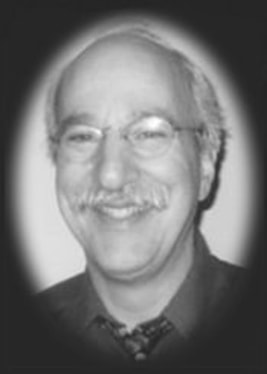
His Story
George Wolfe says that as a high school senior he knew only what he would not do: “the only careers I would not pick would be a career in science (since I was so uninspired in it) and teaching (since it didn’t pay).” Looking back, he realized he had been training for teaching all along. In ninth grade he coached an eighth grade track team, in tenth he ran a church drive for Biafra and a community-wide anti-drug program, and the next year he started a Big Brother organization. In college he found biology, and a Peace Corps program at SUNY Brockport sent him to Zaire, Africa, as a teacher of biology, chemistry, English and political economics. “After leaving Africa, I knew I had found not only a career but also a calling.”
He taught in Rush-Henrietta, Keshequa and Cal-Mum schools in New York before joining Rochester’s Edison Technical High School and, in 1984, Wilson High, an inner-city school where about 80% of students qualify for free or assisted lunch. There he built a science program he believes “may be unique nationally,” growing AP Biology from six students a year to two full sections, creating a post-AP “Research in the Biological Sciences” course, and leading the team that wrote the integrated physical science course for the school’s International Baccalaureate program.
His honors include the 1998 Presidential Award for Excellence in Math and Science Teaching, the Radio Shack National Science Teaching Award (2002), the Shell Science Teaching “National Science Teacher of the Year” Award (2001), a proclamation from the Monroe County Legislature (2002), the New York State Outstanding Biology Teacher Award from the National Association of Biology Teachers (1990), and the Tufts University National Teacher of the Year award (1992). He was a National Teachers Hall of Fame finalist in 2003.
Beyond the Classroom
For twelve years Wolfe has hosted Homework Hotline, a live call-in homework help program on Rochester’s PBS station, WXXI, four evenings a week. It has won an Emmy, a Parents’ Choice Award and a Telly, and now airs in six public television markets across New York State. Students from third grade to twelfth call in, parents ask for help with algebra, and every Thursday brings a live science challenge. He also writes a weekly help column for the Democrat and Chronicle, and spent three years on the Buffalo Bills children’s show with “Football Physics” segments.
Every November since 1977 he has led an after-school marine biology course that ends in a weeklong field study on San Salvador, in the Bahamas. He also runs a science club that has taken students canoeing, camping, and to New York City’s museums and zoos, and every month he takes seniors to work in a downtown soup kitchen. He is the author of The Nasonia Project, a series of inquiry-based genetics labs built around a parasitic wasp, and the presenter of Thinkwell’s Biology, a CD lecture series used in more than 100 college freshman biology programs.
Philosophy Into Practice
Wolfe’s approach is, in his words, “if you combine energy, work, passion and compassion, you will succeed.” On the first day of school he hands students a wasp and a pupa and asks them to observe, hypothesize and design an experiment, because “ambiguity [is] a way of life and questions [are] rewarded with more questions.” His integrated physical science course opens with the monkey-and-hunter problem, and a Mickey Mouse ornament hanging from his ceiling serves as the “water molecule” that no one forgets. His room, 304, was a tourist stop for younger students, with inflatable palm trees, trip photos and a flood of equipment from grants, all part of his effort to build a “Culture of Biology” at Wilson.
“If you combine energy, work, passion and compassion, you will succeed.”— from his essay, “In the Classroom”
“Biology cannot merely be the study of books, it is the study of life.”— from his essay, “Professional Profile”
In His Own Words
“The world is my classroom; I will only be limited by the dreams I don’t have.”— from his essay, “Professional Profile”
“I was measuring success by the number of lives I could touch, the amount of help I could give and the differences I could make.”— from his essay, “How Do You Measure Success?”
“I have always said that there is no more important career than teaching. Teaching touches lives. Touching lives brings satisfaction.”— from his essay, “How Do You Measure Success?”
“There is nothing wrong with inclusion. There is something wrong with the way we implement it.”— from his essay, “Educational Issues”
“I often end the story with the line “I’m still not sure what I want to be when I grow up”!”— from his essay, “Professional Profile”
What Others Said
“I have seen firsthand how he creates magic with kids….all kinds of kids.”— Bolgen Vargas, Rochester Board of Education
“One of the things I respect most about him is that he teaches in one of the most impoverished districts in the nation when he could have gone elsewhere and made over $20,000 more.”— Bolgen Vargas, Rochester Board of Education
“It was once said of ABC reporter Sam Donaldson, that if TV didn’t exist, Sam would go door to door. That in a phrase sums up George Wolfe. If schools didn’t exist, George would find a way.”— Gary G. Mover, VP of Television, WXXI
“Yes, he is great on camera. Yes, he is entertaining and fun. But first and foremost — George is a teacher.”— Gary G. Mover, VP of Television, WXXI
“He has more than just an excellent rapport with his students.”— Michael A. Occhino, Science Team Leader, Wilson Magnet High School
“The energy and enthusiasm Mr. Wolfe demonstrates while teaching captivates all in attendance.”— Wilson Magnet High School administrator and IB Coordinator
“He brings life and excitement to learning and leaves everyone wanting to learn more.”— Marie E. Zettek, former student
“Mr. Wolfe is able to connect with his students and bring alive his class in order to make the subject interesting.”— Abel Pérez Pherett, parent of a student