
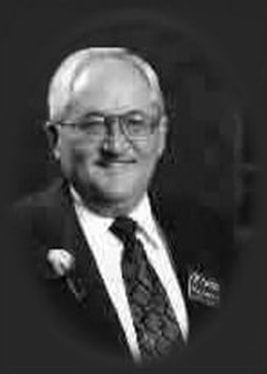
His Story
George A. Beyer began his teaching career at an elementary school in Anaheim, California, then taught sixth grade for a year in Kalispell, Montana, before moving to high school — where he would remain for the next thirty-four years, all of them at Flathead High School. He held a bachelor’s degree in psychology, English, and education from UCLA, and pursued graduate coursework across more than thirty years and too many schools, as he put it, to fully list, including summers at Texas A&M’s NSF Psychology Institute in the early 1990s. The second semester of his very first year at Flathead, he began teaching psychology — the subject, he said, he loved most — and in 1978 he introduced one of the first college-level psychology classes for high school students anywhere in the United States. By the final fifteen years of his career he taught nothing but psychology and Advanced Placement Psychology, a course that grew so popular that seventy to eighty percent of Flathead’s seniors eventually enrolled in it, with roughly eighty percent of his AP students passing the exam after the College Board added psychology to its offerings in 1993.
Beyer’s honors piled up especially in his final years of teaching and just after his 1996 retirement: Montana Teacher of the Year and a Milken Educator Award, both in 1996; a spot on the Montana Teacher Forum board of directors in 1996-97; the J.P. Getty Award in 1997; and the Inspirational Teacher Award from Montana State University in 1990. He gave a quarter of his $25,000 Milken award to establish a permanent scholarship fund for Flathead High School students, adding to it every year afterward. Retirement did not slow him down — he spent his time as an unpaid volunteer teacher’s aide at two rural schools near Bigfork, working one-on-one with at-risk students on language skills, teaching psychology to seventh graders, serving as an English and math aide, and even taking on cafeteria, recess, bus, and sidewalk duty because he remained a certified teacher.
Beyer met U.S. Senator Max Baucus after inviting him, along with candidates from both major parties over the years, to speak directly to his classes — a habit that reflected his broader belief that students should see civic engagement modeled, not just described. Even after retirement he continued mentoring younger teachers across Montana by email and mail, sharing more than sixty pages of ideas for teaching psychology with hundreds of educators around the state.
Philosophy Into Practice
Beyer described teaching as a calling rather than an occupation, rooted in a Depression-era family history of hardship and generosity: his immigrant father and Kentucky-raised mother, after a bare but joyful first Christmas together in 1930, vowed that if they were ever in a position to help others, they would. Beyer said that vow shaped him directly, and he tried to pass the same lesson to his own children. He believed a teacher had to know the subject matter deeply, understand how students actually learn, and above all demonstrate a morally upright life as a model for young people — because, in his words, a teacher who cannot control a classroom cannot teach, and a 55-minute lecture is sure to put most high schoolers to sleep.
In practice, that philosophy translated into famously theatrical teaching: he jumped, crawled on the floor, barked, sang, and ran around the room to make abstract psychological concepts vivid, blocking the classroom door until students could define a vocabulary term, or running elaborate multi-day simulations of addiction complete with secret “addict” identities and hidden diaries. He learned every student’s name within the first week of class, kept note cards on their interests and plans so he could follow up weeks later, and visited hospitalized students personally, having classmates write them encouraging notes.
“I know of no other occupation or profession where one can have such an influence or receive such benefits. Perhaps Jackie Robinson’s statement, ‘The only lasting value in any life is the impact for good he (or she) has in the lives of others,’ explains why I teach. I have had the chance to make an impact for good over 10,000 times.”— from his essay, “Philosophy of Teaching”
“A teacher is one who cares for children, knows the subject matter, uses effective teaching, loves learning, loves teaching, demonstrates moral and spiritual values, is professional, and teaches. Without a true love for children and a concern for them, one cannot be a successful teacher.”— from his essay, “Philosophy of Teaching”
In His Own Words
“My approach to teaching? In a word, active. I jump, move, crawl, lie on the floor, bark, rap, sing, scream, run around the room—whatever the lesson calls for, whatever will help my students learn.”— from his essay, “In the Classroom”
“Let me restate: The whole point of all the bizarre things I did was to make class interesting and make my students want to learn. Oh, and I had fun.”— from his essay, “In the Classroom”
“In my second week of volunteer work, my fourth grader seemed completely distracted so I asked, ‘Are you okay?’ His response, ‘yeah, but Dad’s still in jail.’… Children at risk are a major problem for education and our society. If teachers and schools can’t help save them, I fear for our children and our country.”— from his essay, “Educational Issues”
“Who am I? A teacher. A teacher who at the beginning of each school year met his students at the door with a smile, a handshake, and the words, ‘I’m George Beyer and you are?'”— from his essay, “Who Are You? What Makes You Tick?”
“In the words of Christa McAuliffe, ‘I touch the future, I teach.’ That is who I am.”— from his essay, “Who Are You? What Makes You Tick?”
What Others Said
“I nominate George Beyer. In 1996, he was both Montana Teacher of the Year and a Milken Educator. Even though he is now retired, George continues to participate in state education events and serves as a volunteer aide in two rural schools. George is clearly one of Montana’s best.”— Eric Feaver, Nominator
“I am writing today to urge you to choose Mr. George Beyer for induction into the National Teachers Hall of Fame. I can think of few individuals who have earned and are more deserving of such an honor… George’s career of 38 years has proven him an able, creative and committed teacher.”— Max Baucus, United States Senator, Montana
“It is my great honor to write this letter of recommendation for George Beyer of Bigfork, Montana… George always told us, and them, to ‘buckle up’ when we got into a car, and I know just that small, constant good humored reminder made a real difference in students’—and my—behavior.”— Nancy Grippo, Chair, Teachers of Psychology in Secondary Schools, American Psychological Association
“George Beyer was a colleague of mine from the beginning of my teaching career at Flathead High School twenty-one years ago until his recent retirement… George tells [Joe’s] story not only to honor Joe’s memory, but also to encourage students to ‘always wear your seat belt; don’t drink and drive; don’t ride with someone who has been drinking; and don’t get AIDS.'”— Susan K. Brown, Teacher and English Department Chair, Colleague and Friend
“George Beyer is one of the most compassionate, knowledgeable, and dynamic teachers I have known… He never had to say these things directly, never had to challenge our fears and prejudices in ways that might have made us defensive or resistant. Instead, he guided us gently with kindness, intelligence, and a playful sense of wonder.”— Melanie Rae Thon, Associate Professor of English and Creative Writing, The Ohio State University (Former Student)
“I don’t know if I have ever met a teacher who was more committed to his students’ welfare. George cares that they do well in school, but also that they do well in life, and he communicated that to the other teachers here in a number of ways.”— Ludy T. Benjamin, Jr., University Professor of Distinguished Teaching, Texas A&M University