
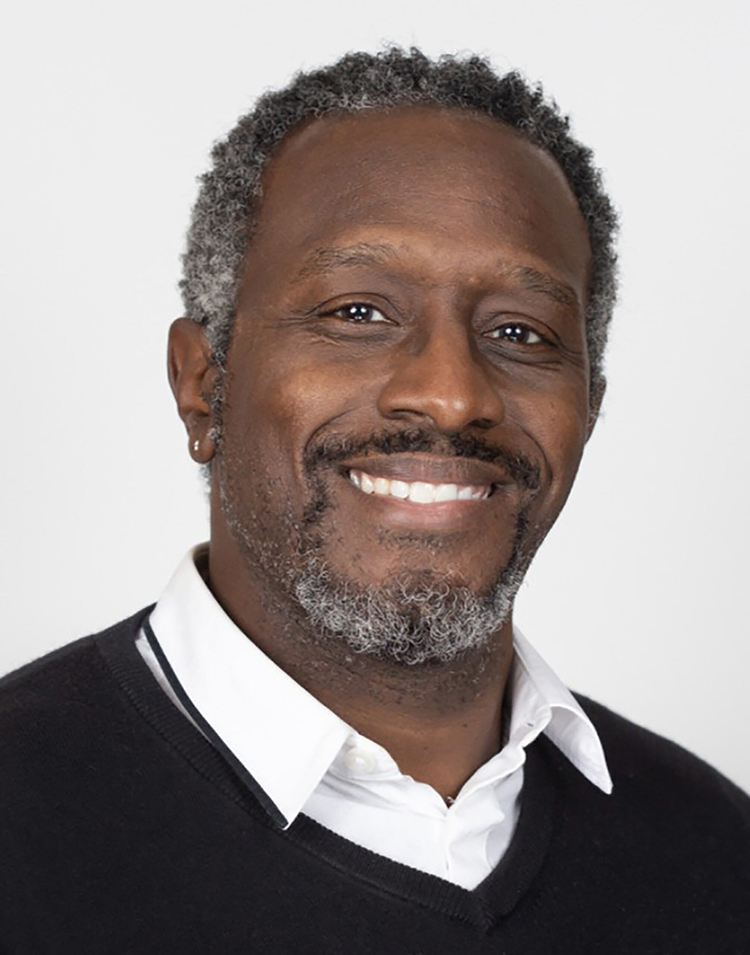
His Story
Michael Pope says his philosophy begins with the belief that “we teach who we are.” He grew up in military communities, and he teaches in the Department of Defense Education Activity, which serves the children of service members. He earned a master’s in science and social studies education from Brenau University in 2003, a Japanese studies certificate from the University of Maryland Global Campus Asia in 2008, and an Ed.D. in curriculum and instruction from the American College of Education in 2024, where his research focused on STEM access and identity.
He began in 1999 teaching 8th-grade gifted science in DeKalb County, Georgia, then moved in 2003 to DoDEA as a science coordinator and 5th-grade teacher. Since 2006 he has taught 7th- and 8th-grade math, science and gifted education in Japan. He was Pacific East Teacher of the Year in 2021, a 2020 Global Teacher Prize top-50 finalist, a Hall of Fame finalist in 2022, and the U.S. 8th-grade representative on the National Assessment Governing Board. His principal calls him “an extraordinary educator whose contributions to STEM instruction are nationally recognized and deeply influential.”
Beyond the Classroom
Pope has taken part in an unusual list of international fellowships: a Fulbright exchange to Japan in 2001, Teachers for Global Classrooms in Colombia, a Global Teacher Fellowship in South Africa, a Grosvenor Teacher Fellowship to Svalbard, a Goethe-Institut STEM fellowship, and the Nobel Prize Teacher Summit. He is a National Geographic Certified Educator and co-authored SIMOC, a National Geographic Education simulation of living off-world. He has written for Education Week and The Hechinger Report.
At the regional level he is a subject matter expert on student engagement, facilitates the Pacific Teacher Leadership Academy, and records short professional development episodes for colleagues. He mentors students in the Junior Science and Humanities Symposium and eCYBERMISSION, hosts STEMinars with Tsukuba University, and has served on teacher-of-the-year review panels. A colleague who taught with him in the Defense Department for over twenty years says working with him was a highlight, and the two represented Japan in a kite-flying tribute to educator Janusz Korczak.
Philosophy Into Practice
Pope created the Global, Local, and Personal (G.L.P.) model, in which students connect a topic to global issues, to its effect on their own community, and to their own lives. Students have studied climate change and its effect on their base community and renewable energy in military housing, then presented to base commanders and parent advisory councils. One group’s school recycling proposal became a pilot program and was later expanded base-wide.
In an eCYBERMISSION project, students who noticed batteries being thrown in the trash worried about chemicals reaching the shared water supply between their base and the nearby Japanese community. They built a low-cost filter from local materials, ran a battery-recycling awareness campaign, and presented to military engineers. Parents describe memorable assignments such as an “Egg Element Baby” project where each student was assigned an element, a climate diorama, a space hotel with ads, and quarterly seat changes that taught students to work with new classmates.
“We teach who we are.”Dr. Michael Pope
In His Own Words
“Every student can solve real problems if we give them the tools, voice, and opportunity to do so.”Dr. Michael Pope
“I teach because I believe there is a place for everyone in STEM and that education, when done with integrity and innovation, has the power to change lives.”Dr. Michael Pope
“Teaching is all about community, and that extends beyond my classroom, my immediate colleagues, to my connected teacher networks.”Dr. Michael Pope
What Others Said
“Dr. Pope is an extraordinary educator whose contributions to STEM instruction are nationally recognized and deeply influential.”James Rippard, principal, Zama Middle High School
“Working with Michael was one of the highlights of having taught with the Department of Defense for over twenty years!!”Margaret Flavan-Brown, former colleague
“His classroom is a space where students feel valued, respected, and motivated to reach their fullest potential.”JoAnn P. Jackson, Ed.S., special education chair, Zama Middle/High School
“He creates a learning environment where every student feels seen and valued.”Parent of two former students