
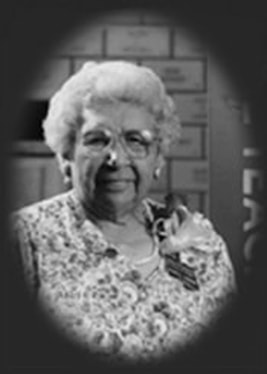
Her Story
Dorothy (Sunrise) Lorentino, a Comanche woman raised in Comanche County, Oklahoma, did not know what a teacher was until 1917, when she was six years old and her parents tried to enroll her and her sister in the public school closest to their home in Cache, Oklahoma. They did not know that Cache Public Schools prohibited American Indian children from attending — the district’s stated rationale was that Indian children would “infect” non-Indian children with disease and filth. Her father was determined to enroll his daughters anyway. Once he found the legal path forward, he hitched up the family’s wagon and horses and set out on an all-day, roughly twenty-mile ride over dirt roads from Cache to the Comanche County Courthouse in Lawton, where he filed suit against the school district on his daughters’ behalf. The case was decided in the family’s favor in 1918, and Dorothy and her sister — along with all other Indian children who wished to attend — were finally allowed to enroll at Cache Public Schools, starting in the sixth grade. She was later told that the ruling opened Oklahoma’s public schools, and eventually public schools throughout the United States, to American Indian children who had previously been required by law to attend Bureau of Indian Affairs schools, however far from home. The case is remembered as one of the first major tests of the Indian Citizenship Act of 1924.
Starting school at age six with no English and having lived, as she remembered it, still in a tent, Lorentino had what she called “a very difficult time learning anything” at first. She and her sister later transferred to the Chilocco Indian Boarding School in Chilocco, Oklahoma, where she earned her high school certificate in 1931, before enrolling at Bacone College in Muskogee, where she earned an associate’s degree in 1933 and taught for a year. She went on to Northeastern State University in Tahlequah, Oklahoma, earning her teaching license and bachelor’s degree in education in 1937, and began her teaching career the following fall at the Phoenix Indian School in Arizona. From there she taught at a school on the Papago Indian Reservation near Tucson (1939-42), then at the Navajo Reservation in Tohatchi, New Mexico (1942-44), before moving to Salem, Oregon’s public schools (1944-68) and finally Tillamook School District #9 in Oregon, where she ended her 34-year teaching career in 1972. While teaching in Oregon, she completed a part-time graduate program at the University of Oregon, earning her Master of Education degree in special education in 1947 — a field to which she devoted her entire classroom career, working with children with special needs across Indian and non-Indian communities alike.
Lorentino’s honors, most of them arriving late in her long life, recognized both her teaching and her role as a Comanche elder: the National Indian Education Association named her its 1995-96 National Indian Elder of the Year; the Delta Kappa Gamma Society, which she had joined in 1969, gave her its Lifetime Achievement Award in 1995; she was named one of the Outstanding Women of Comanche County in 1996; and Cache Public Schools created the Dorothy Lorentino Leadership Award in her honor that same year, presented annually to a student who exemplifies the qualities she brought to her own life. At the time of her nomination, at age 86 or 87, she was still substitute teaching for the Lawton Public School System.
Beyond the Classroom
Long after her formal retirement in 1972, Lorentino remained deeply active in Comanche tribal life and education. She continued substitute teaching for the Lawton Public Schools, visited area schools to tell students her own story and encourage them to persist toward their goals, and remained active in Comanche tribal politics. For three years running, she conducted weekly Thursday-evening singing classes at a local Comanche Indian church, teaching both Indian and non-Indian participants to speak and sing Comanche-language church hymns — translating the hymns from Comanche into English and back again for her students, work she described as a bilingual approach to learning. As one of the few people left who fully understood and could fluently speak the Comanche language, she saw this weekly teaching as a way of passing on both language and faith to a new generation.
She was a frequent public speaker, appearing as a guest speaker at Cameron University to tell her story of being denied access to public school because of her race, and she remained a mentor to Comanche and non-Comanche children throughout southwest Oklahoma. In recognition of her lifelong civic and educational contributions, the Mayor of Lawton wrote in support of her nomination, noting that she had “come a long way” from the girl once barred from her local school, and the Comanche Tribe itself, through its Carl Perkins Vocational Education Program, recognized her as a respected elder who continued to serve as a mentor to countless Comanche children.
Philosophy Into Practice
Lorentino’s philosophy of teaching grew directly from her own history as a Comanche woman who had to fight for access to an education. Having spent her entire career in special education, she believed children with special needs demanded more of a teacher’s tolerance, and that her own background as an American Indian gave her particular insight into teaching populations that were different from, and underrepresented within, the educational mainstream. She believed school improvement depended on teachers who were both skilled and culturally responsive — willing to work through cultural and language differences with students and families rather than around them.
She described her reason for becoming a teacher simply: she loved children and needed to work with people, and that meant working not only with students but with their families as well. She held that good teaching represented good human relationships built on a belief in the intrinsic worth of every student, and that a teacher’s central task was building a child’s self-esteem while treating every student as a valuable, contributing member of the classroom.
“Why was I a teacher? It’s simple — ‘I love children’ and ‘needed’ to work with people. I didn’t just work with children, I worked also with their parents and families. I knew how to work well with Indian families because that was my background. I knew there were cultural and language differences at school and I was willing to work through them, not around them.”— from her essay, “Philosophy of Teaching”
“Good teaching represents good human relationships, a belief in the intrinsic worth (absolute respect and acceptance) of each student. Good teachers understand the value of building a child’s self-esteem, as well as the importance of treating all students as valuable, contributing members of the classroom. That’s what ‘teacher’ represents to me.”— from her essay, “Philosophy of Teaching”
In Her OWn Words
“Growing up in Comanche County as a young Comanche girl, I never thought that I would become a teacher as my professional career. Actually, I never knew what a teacher was until I attended public school in Cache, Oklahoma in 1917.”— from her essay, “Professional Biography”
“The Cache Public Schools rationale not to allow Indian children to attend their schools was that they felt that the Indian children would infect the non-Indian children with diseases and filth. We won the court case in 1918 and we were allowed to enroll into the Cache Public Schools along with other Indian children if they so desired.”— from her essay, “Professional Biography”
“Teachers are ‘prisoners of hope’ and ‘dreamcatchers.’ Like our American Indian dreamcatchers that separate good dreams from bad dreams, good teachers have the ability to separate good educational ideas from bad ones.”— from her essay, “In the Classroom”
“No matter how much teacher training that you’ve had, and no matter how good you think you are, the first few years of teaching are usually lousy… What sets good teachers apart is their dedication — their dedication not to an abstract ideal of education but to something much more tangible.”— from her essay, “In the Classroom”
“I have seen Indian children as those children who have many special needs. I have always worked with children with special needs. I always enjoyed the dynamic aspect of working with people directly.”— from her essay, “Philosophy of Teaching”
What Others Said
“Dorothy’s story most certainly matches that of civil rights activist, Rosa Parks. She has dedicated her entire professional career as a special education teacher… Such courage and dedication to a life-long commitment to teaching exemplifies, in my opinion, the best of the criteria for this special recognition by being named to the National Teachers Hall of Fame.”— Dr. Cornel Pewewardy, University of Kansas, School of Education
“It was with her desire to attend public schools, against the administrators wishes, that her father pursued the cause, and in 1918 the Comanche County Court ultimately directed all Oklahoma public schools to allow ‘all’ Indian children to attend public schools. This was a milestone court case in Indian education… It was Dorothy Lorentino’s fortitude that ultimately pursued this chain of events, and at age 86, Dorothy Lorentino still lives today to tell her story.”— John T. Marley, Mayor, City of Lawton, Oklahoma
“It is also common knowledge that Ms. Lorentino has not only endured hardships and discrimination, but has been most helpful in helping our children overcome racial and cultural prejudice. Her philosophy of teaching, that teaching is not a job, but an involvement in children’s lives, should be a indication of how this courageous lady has impacted the lives of so many young productive adults in today’s society.”— Donkor Khalid, Professional Development Coordinator, Oklahoma State Department of Education
“This need is especially keen among American Indians in the state of Oklahoma, where Indian children in schools number over 92,000. Clearly, one of the reasons that so few Indian students desire becoming teachers is the lack of role models. Dorothy Lorentino’s 34-year career as a classroom teacher stands as a significant example of professionalism and dedication to making a difference in children’s lives.”— Armando Pena, Director, Minority Teacher Recruitment Center, Oklahoma State Regents for Higher Education
“I have attended Cache Public Schools for thirteen years. For this reason I feel particularly close to Dorothy Lorentino and, also, without her, I may never have received a quality education due to my Native American ancestry… Dorothy Lorentino’s experiences have shown that anyone can follow and achieve their dreams.”— Kimberly D. Parton, Student, Native American Student Association, Northeastern State University
“As an elder in the Indian community, Ms. Lorentino has been instrumental in providing wisdom and guidance for Indian youth throughout her lengthy career. Her role as a leader among her people has enabled others to progress without the hardships she endured in gaining her education.”— Ron West, Director of Indian Education, Oklahoma State Department of Education