
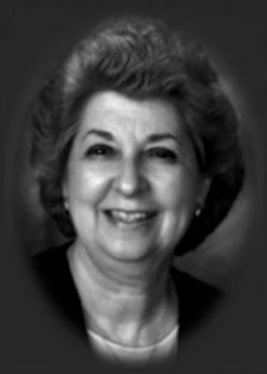
Her Story
Carol Strickland grew up in Fort Worth, Texas, in a low-income family that nonetheless filled the house with books. Her mother had dreamed of teaching, and her father, the oldest of seven children, had to leave school after the eighth grade to help support his family. Both of them pushed her and her older brother toward college, and both children attended Texas Christian University on academic scholarships. In junior high she fell in love with drama and imagined a life as an actress. A pragmatic high school drama teacher, Mrs. Todd, told her that a teacher could “shape young minds and train young talent and enjoy their successes vicariously,” and by sophomore year Strickland’s mind was made up.
She earned a B.A. in English and speech from TCU in 1966 and began teaching speech and English at Lake Aire Junior High in the spring of 1967. She taught at Denver East High School (1967–74), Alice Robertson Junior High (1975–76) and Connors State College in Oklahoma (1976–86), where she taught English, speech and drama, earned her M.A. in speech from TCU in 1976, and served on the Muskogee Little Theatre board. In 1986 she moved to Emporia High School, where she has taught ever since, adding adjunct speech teaching at Emporia State University in 1999.
Her honors include the 1999 Kansas Teacher of the Year, the U.S. Department of State Teacher Exchange Award (1999), the Wal-Mart Teaching Award (1999), the Golden Apple Award (1997), a place on the USA Today All-Teacher Team (2000), the U.S. Department of State Secondary School Excellence Award (2001), and the Emporia Gazette’s Pre K–12 Educator of the Year (2002). She has earned the National Forensic League’s Second and Third Diamond Awards for coaching. She was a finalist for the National Teachers Hall of Fame in 2002.
Beyond the Classroom
“I often wish that I had more time to devote to civic organizations and volunteer efforts,” Strickland writes, but her list is long. She serves on the board of the Humane Society of the Flint Hills, which spent five years working with the city to build a new animal shelter, and she is known to pitch hay bales from a flatbed truck at the society’s winter giveaways. She belongs to the Emporia Arts Council and the Friends of the Library, and is a contributing member of the Lyon County Historical Society, Habitat for Humanity and the Kansas Humanities Council. In 1993 and 1994 she took part in the Council’s “History Alive” school program, portraying the populist Annie Diggs.
At the high school she helped found the Renaissance Program, which partners with local businesses to reward students. It includes academic pep assemblies, honor card discounts, a Most Valuable Attitude program, a used car giveaway each April and scholarships worth several thousand dollars. Josten’s named it one of the top ten in the country. Her forensics students perform at nursing homes and civic clubs, including an improv troupe called “The Yard Gnomes.”
Her view of “community” reaches across the world. After spending three weeks in Ukraine in October 1999 on a State Department teaching award, she started a pen pal exchange with students in the village of Verkhniy Rogachick. In 2002 she returned with nine students under a State Department grant, and the Ukrainian teacher and ten of her students were due to visit Emporia the following spring.
Philosophy Into Practice
Strickland teaches a wide range of students. Her schedule has included junior communication, video broadcasting, freshman English for students who failed it the first time, an applied communication class for students with limited English, and novice forensics through advanced debate. She volunteered to teach the freshman repeaters’ course after arguing that it should not go to a first-year teacher. In her words, “there are no bad students, only discouraged ones.” Her students do not face daily lectures but “daily challenges to think, speak, read, listen, and write in a responsible, efficient manner.” Her classroom, Room 202, doubles as a storage room for debate evidence, a practice space and a coaches’ workroom, which she cheerfully calls “a mess.”
“Teaching is a calling rather than a job; a challenge rather than an obstacle.”— from her essay, “Philosophy of Teaching”
“If we haven’t laughed together at least once during a class, then there’s something wrong.”— from her essay, “In the Classroom”
In Her Own Words
“Students may not always remember what they were taught, but they will always remember how they were taught and how they were treated.”— from her essay, “Philosophy of Teaching”
“Being one’s best is important — being the best isn’t.”— from her essay, “Philosophy of Teaching”
“My students know that ‘can’t’ is a four-letter word and is not to be used in my presence.”— from her essay, “Getting to Know You”
“Teachers are the architects, contractors, construction workers and supervisors of where that bridge will lead, how strong it will be, and how long it will last.”— from her essay, “Getting to Know You”
“My message is that life is fragile and valuable, and we must learn to work things out peacefully through communication.”— from her essay, “Educational Issues”
What Others Said
“Her first thought then, and always, is what it means to her kids.”— John Heim, Superintendent, Emporia USD 253, recalling her reaction at being named Kansas Teacher of the Year
“We have had some great Kansas Teachers of the Year but none better, in my opinion, than Carol Strickland.”— Dr. Andy Tompkins, Kansas Commissioner of Education
“She really and truly cares for them and about their well being.”— James L. Menze, Principal, Emporia High School
“There is not a teacher I admire more than Mrs. Strickland. I have come to view her as my mentor, my ideal, and my friend.”— Tammi Wirsig, special educator and team-teaching colleague
“Carol has even convinced a school board member to strap on a parachute and bail out of a plane above 1,500 screaming EHS students — just to emphasize determination as a vital part of the Renaissance Program.”— Michael Woodbury, colleague and district technology coordinator
“She truly reaches kids. I know because she reached me.”— Bradley Areheart, former student
“Mrs. Strickland is the quintessential professional educator.”— Corey Johnson, former student
“For Carol Strickland, teaching is not simply a job; it is a ‘special call’ to help students.”— Varkey K. Titus, Ph.D., and Soosamma K. Titus, R.N., parents of former students