
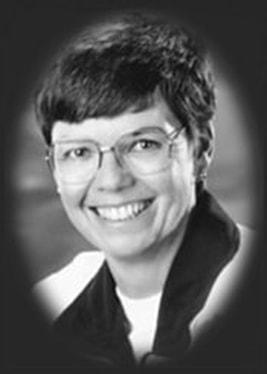
Her Story
Barbara Kelley decided at about twelve that she wanted to teach physical education, at a time when “there were few outlets for girls interested in sports.” She held to that choice through a competitive private girls’ high school where, as National Honor Society president, she was asked not to mention her intended major at the induction ceremony, and where, she writes, the most disheartening part of the memory is the number of teachers who advised her to choose a different career. At Longwood College in Virginia, her professors instilled “tremendous pride in our chosen discipline and a sense of responsibility to the entire teaching profession.”
She graduated magna cum laude in 1974 and began teaching in the rural, poverty-ridden schools of Mecklenburg County, Virginia, where there were no standards against which to measure her work and no mentor to turn to. Those early lessons about unequal schools shaped her whole career. She went on to Bangor, Maine, earned a master’s in education from the University of Maine and an M.S. in business from Husson College, and taught physical education in the Bangor schools from 1975 to 2003, first in grades 6–9 and then, for 19 years, K–3 at Vine Street School. She also coached varsity field hockey and tennis, and was named Maine Field Hockey Coach of the Year in 1981.
Her honors include the 1998 Milken National Educator Award, Teacher Magazine’s 1999 designation as “One of Ten People Who Shaped the Decade in American Education,” and Maine Elementary Teacher of the Year for physical education (1991). In 1997 she became the first and only classroom teacher elected to chair the National Board for Professional Teaching Standards, succeeding founding chair Governor James B. Hunt, and she held the post until 2003.
Beyond the Classroom
Kelley served as chief negotiator for the Bangor Education Association, as vice president and NEA director of the Maine Education Association, and as a Maine delegate to the NEA Representative Assembly for eighteen straight years. As chair of the National Board she spoke at the California Superintendents’ Annual Meeting, the White House Conference on Teacher Quality, Beijing Normal University and a European Union quality education conference in Athens. She led teacher delegations to China and to Australia and New Zealand, helped develop teaching standards for Romanian teachers under a World Bank program, and now serves on the boards of the James B. Hunt Institute and Donors Choose NC.
She also tried to bring the world back to a school where, she writes, most students rarely left the city. With the principal’s help she turned a six-by-twenty-four-foot bulletin board into “Where in the USA is Mrs. Kelley?” and then “Where in the World is Mrs. Kelley?,” posting letters, postcards, newspapers and a map of her travels. She brought each child chopsticks from China, taught them to use them, and organized Olympic units and folk dances. Since retiring she has been a senior consultant to the Asia Society, which is opening ten internationally themed high schools, and chairs a committee for North Carolina’s “North Carolina in the World” initiative.
Philosophy Into Practice
Kelley taught in themed units built around stations, with children counting off in multiples of four or backwards by twos to form groups. Every year there was a four-to-six-week climbing unit in which the gym became “the Swamp,” built out of rope ladders, bungee spider webs and climbing equipment, and decorated by her over three days. Children brought stuffed animals to live there, and more than 200 “animal guests” inhabited it at once. During “Swamp Week” over two-thirds of the families came to a class, some of them for the first time. A preliminary “Journey to the Swamp” unit taught cooperative problem solving, and a weekly “extra gym” for children who struggled became, in her words, “a special privilege, rather than a remedial activity.”
“Our motto was they simply hadn’t learned a skill or concept “yet.””— from her essay, “In the Classroom”
“Teachers are advocates for the teaching profession, and leaders in the effort to elevate its stature.”— “Kelley’s Core Proposition,” from her essay “How Do You Measure Success?”
In Her Own Words
policy decisions.”— from her essay, “Professional Profile”
“It was important to me that no student should ever feel inept or inadequate in my program.”— from her essay, “In the Classroom”
“To me, success was not just their improved skills; it was that all students considered “extra gym” to be a special privilege, rather than a remedial activity.”— from her essay, “How Do You Measure Success?”
“When teachers finally accept the role of education leaders, when teacher leaders are the rule rather than the exception; that is when we will have moved the profession forward.”— from her essay, “Professional Profile”
What Others Said
“Barbara Kelley is quite simply a brilliant educator who has spent her career advocating for high teaching standards.”— Lynne Coy-Ogan, Principal, Vine Street School
“I believe that there is no finer teacher nor more distinguished teacher-leader in America than Barbara Kelley.”— Susan B. Carmon, NEA Department of Teacher Quality
“She is the teacher for whom the National Teachers Hall of Fame was created.”— Karen D. Garr, friend and colleague
“I knew that I would be a different and more confident adult today had I had a PE teacher like Barbara Kelley.”— Karen D. Garr, friend and colleague
“Barbara Kelley’s actions on behalf of students, teachers and community earned her the highest level of respect.”— former Superintendent, Bangor Public Schools
“She is creative and innovative in her approach to Physical Education, and continually aims to build elements of self-confidence and pride in her students.”— Jeanne Campo, former colleague
“Mrs. Kelley was not only a teacher and a role model, but someone they regarded as a friend.”— Dianne E. Johnson, parent of former students